

Understanding Mycotoxins in Corn Beyond What the Eye Can See

Mycotoxins in corn can pose hidden risks even when ears appear healthy and the kernels look clean. A field of golden corn may seem ready for a successful harvest, but appearance alone cannot guarantee grain safety. There are certain fungi that can produce mycotoxins (toxic substances), and these may be present in the corn even when the mold itself is very difficult or indeed impossible to see. This is relevant whether the grain is destined for human consumption, for livestock feed or for storage. Knowing when contamination is more likely to occur and why proper sampling and testing are so important will go a long way to helping the farmer make the right decisions without having to rely on speculation.
Why Mycotoxins in Corn Can Go Unnoticed in Healthy-Looking Kernels
Mycotoxins are compounds produced by certain fungi that can infect corn in the field or grow on it under poor storage conditions. Some of these fungi cause ear rot, but infection doesn’t always result in obvious discoloration or visible mold. Kernels adjacent to those that are obviously affected may well contain mycotoxins and yet appear perfectly normal.
The reverse is also very important. The presence of mold doesn’t in itself tell you what toxin is present or indeed how much. The type of fungus, the conditions under which it grew and the extent of contamination all have an impact on the risk. A visual inspection can alert you to possible trouble but it won’t tell you whether the grain meets the standards for its intended use.
These risks are also relevant for livestock. Corn grain and corn silage can introduce mycotoxins into animal feed and different animal species will respond in different ways to that exposure. That’s one of the reasons why your testing decisions need to take into account how the crop is going to be used.
Different Weather Conditions, Different Mycotoxin Risks
Not all the mycotoxins will develop under the same conditions. Aflatoxins are associated with Aspergillus fungi and are more likely to be a problem when corn experiences high temperatures and drought stress. Fumonisins are associated with Fusarium ear rot, and the risk of infection can increase during hot, dry periods and with kernel damage.
DON (vomitoxin) is linked with Gibberella ear rot, which is more prevalent under cooler, wetter conditions around flowering. Insect damage, bird damage or hail can all create entry points for fungi, although damage doesn’t necessarily equate to contamination.
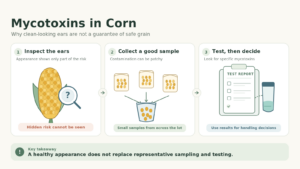
Farmers can use the weather of the season and the field history to work out where to look more closely. Peeling back the husks and checking the ears in a number of areas of the field may reveal fungal growth that you can’t see from the outside. Clean looking ears don’t necessarily rule out the presence of mycotoxins and of course the risk will vary according to local climate, hybrid and field conditions.
Why Representative Sampling and Testing Matter
Mycotoxins are rarely evenly distributed throughout a grain lot. A few contaminated pockets can easily be missed if your sample is taken from just one convenient location. Sample collection is just as important as the test itself.
A practical approach would be to take a number of smaller samples from different parts of the lot and combine them in accordance with an appropriate sampling method. Samples can be taken at intervals from moving grain during loading or unloading. For a stationary lot, suitable probes can be used to take samples from various locations. The final sample should be collected, prepared and submitted in accordance with the testing provider’s instructions.
Commercial test kits can measure specific mycotoxins if used properly. An alternative is to use a professional lab or a grain inspection service (particularly where the results are going to be the basis of a major sales or feeding decision). As the tests are for specific mycotoxins, the farmer should know what they are testing for rather than assume that one result is going to cover all their bases.
Turning Test Results Into Grain-Handling Decisions
Think of a farmer harvesting a field that’s suffered from both drought and insect pressure. Most of the ears are in good condition, but a few have damaged kernels. Rather than judge the whole crop on appearance alone, the farmer keeps track of the higher-risk grain, takes a representative sample and has it tested before deciding what to do with it. This doesn’t mean the crop is contaminated; it simply shows how testing can resolve uncertainty.
If the results do indicate a problem then the next steps will vary depending on the toxin in question, the concentration of that toxin, the intended use of the grain and the relevant local limits. The suspect grain should be held separate while appropriate handling or disposal options are worked out. It should not just be blended in with the unaffected grain to ‘hide’ the problem.
Prompt drying and appropriate storage temperatures can help limit further fungal growth and toxin production. They won’t reliably remove the mycotoxins that are already present. Farmers should also bear in mind that the requirements will be different between the food and feed markets and between regions.
Managing Mycotoxins in Corn Through Testing and Prevention
Healthy looking corn is not necessarily mycotoxin free. Field scouting and weather observations can help identify potential risks, but representative sampling and appropriate testing give you clearer evidence to help you make a decision. You can then combine that with careful harvesting and storage practices to manage the uncertainty and pick the option that is right for your crop, your market and your local situation.