
Uneven Water Movement in Fields: Why Some Spots Stay Wet

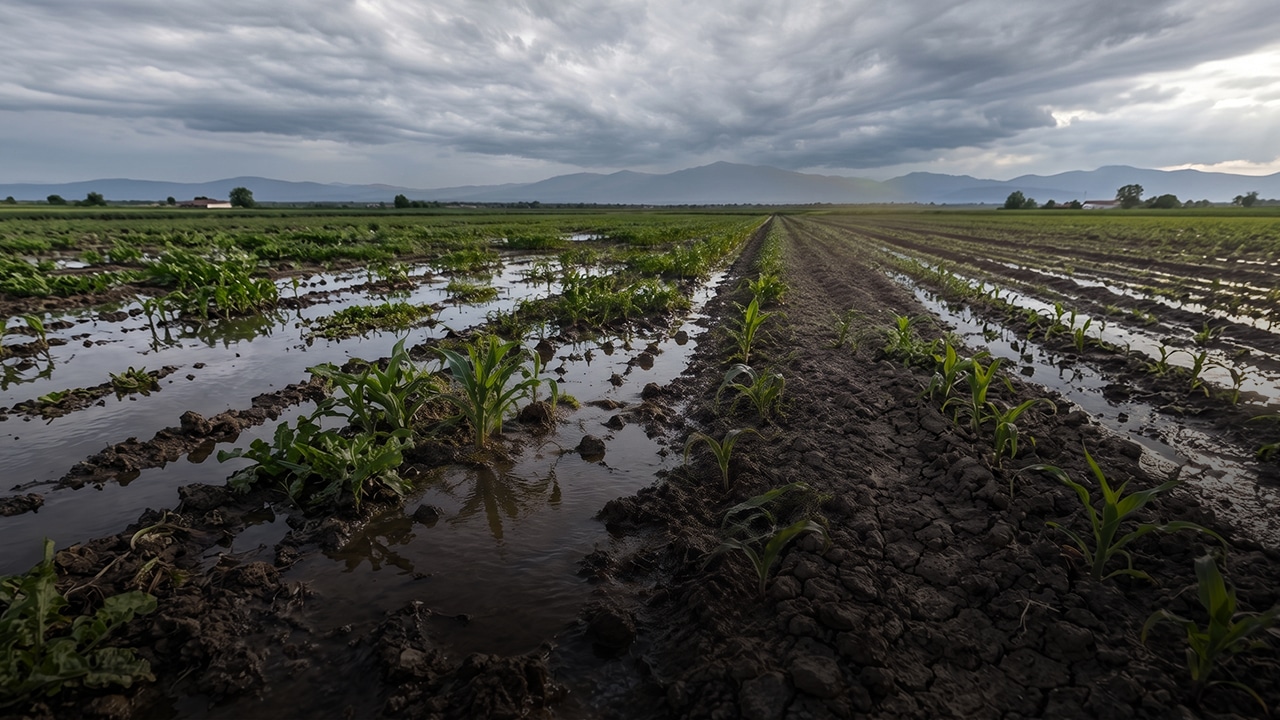
Uneven water movement is why one section of a field can stay soggy after heavy rain while another dries out within hours. Water will pool in the low spots, run off the slopes and soak into the ground at different rates. The fact that water behaves in this way in a field is important as the crop needs moisture around its roots but also air in the soil. It can have an effect on the crop, the soil and the way the water is managed. It’s always worth knowing why the water is behaving in that way before you do anything else as there can be a number of very different causes behind a similar-looking problem.
Why Wet and Dry Spots in Fields Develop
The shape of the land. Water moves downhill, so small depressions will hold it and slopes will shed it. An FAO guide to surface irrigation goes on to state that ground undulations will interrupt the flow of water and cause it to be concentrated in the depressions so that it will stay in some parts of the field longer than others.
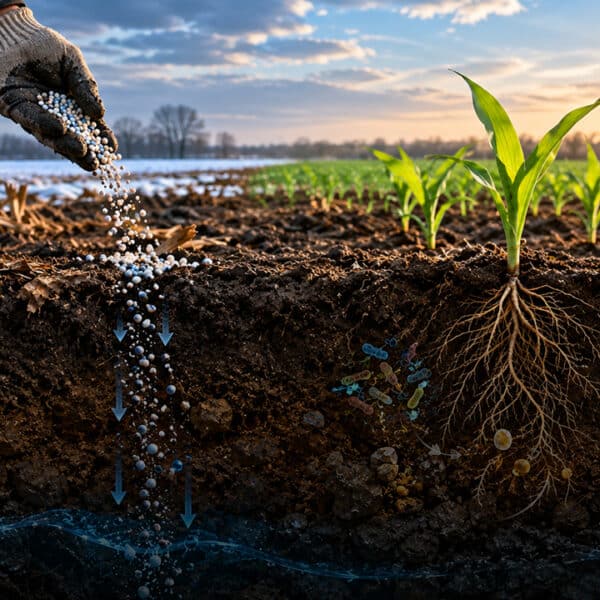
How readily the soil will take in water. Infiltration is the process of water getting into the ground. Water that doesn’t infiltrate simply runs off, and Utah State University Extension describes this as a cause of uneven distribution and loss from the field with sprinklers. Soil conditions have an effect. Penn State Extension states that compaction will reduce infiltration and USU notes that large sprinkler droplets can actually seal the soil surface and cause runoff. The USDA’s Natural Resources Conservation Service (NRCS) goes on to say that tillage (particularly in the warmer months) will reduce infiltration and increase runoff and that heavy rain or irrigation on soil with little residue cover will increase the likelihood of erosion.
Poor natural drainage. A lot of the soils in the Upper Midwest have poor natural internal drainage (Gary Sands, University of Minnesota Extension). The reasons for this are slow permeability or dense layers, flat or depressional land and in some areas salt near the surface. Without artificial drainage, such soils would remain waterlogged for several days following heavy rain.
The irrigation system itself. With irrigation you can have uneven application of water right from the start. USU’s fact sheet lists several causes:
- Pressure differences. There’s a pressure drop along a pipe due to elevation change (a 2.3-foot rise in elevation will result in a drop of about 1 psi) and there’s also a pressure drop due to friction in the pipe. Low pressure can result in a donut-shaped spray pattern and too much pressure can break the spray up into very fine droplets which land close to the sprinkler.
- Worn or mismatched parts. Worn nozzles will discharge more water at a given pressure and mixing of nozzle sizes/models will add to the variation. In one University of Idaho test of 30 wheel-line sprinkler systems, leaks and worn, wrong or missing nozzles resulted in 26% more water being applied.
- Clogging, wind and timing. Debris can clog nozzles and emitters, wind can alter where the water lands, while evaporation can reduce how much reaches the soil and set times that vary between sets can reduce field-wide uniformity.
USU’s bottom line is that system maintenance and management are the things the producer can control most.
What Uneven Moisture Means for Crops
Soils that remain too wet will have water in the spaces that normally contain air. The University of Minnesota Extension states that saturated soils don’t have sufficient air for root development and that the roots of most crops grown in Minnesota can only tolerate excess wetness for a couple of days. Wet ground can also delay planting and other field operations. The University of Minnesota notes that good drainage will hasten spring drying and warming, thus enabling earlier planting.
Drier patches present the other side of the problem in that the plants in them may simply not be getting enough water. The same field can be showing both water stress due to excess moisture and water stress due to lack of moisture. Those are the clues, but poor growth on its own doesn’t prove a water issue as nutrient deficiencies, pests and other conditions can all cause a similar pattern.
How Uneven Water Affects Soil and Water Resources
Water moving over bare or vulnerable ground can take soil with it. The NRCS distinguishes between sheet erosion (the slow removal of topsoil over large areas, often going unnoticed) and rill erosion (the formation of small channels of concentrated flow). Causes are generally bare soil, long or steep slopes, intense rain or irrigation with little residue cover and poor infiltration.
Runoff can carry more than just soil. The EPA states that fertilizer, manure and pesticides can all be carried off the field via runoff, infiltration and irrigation return flows and that rainfall and snowmelt are the primary carriers of these pollutants to surface waters. Agricultural runoff is the number one cause of impacts to rivers and streams in the EPA’s national assessment. Whether or not any of this actually occurs in any given field is going to be a function of what was applied and where the water is going.
Not all water loss is visible. Some of it moves below the root zone and can end up in the groundwater. Elsewhere, slow drainage can keep the soil saturated. Uneven wetting also makes irrigation decisions more difficult. The FAO guide points out that on a poorly leveled field it is very difficult to apply the right amount and in practice much greater depths are generally applied. The high points will tend to become saline. When you give a dry spot enough water, you may end up giving a wet spot more than its crop actually needs.
Reading the Clues in a Wet-and-Dry Field
Picture a field where the water stays in the shallow depression after the rain and the upper part of the field dries out rather quickly. The crop growth then looks quite uneven. The wetness in the depression may be due to poor drainage, but compaction or differences in soil texture could also play a part. The drier area may simply be shedding the water off more quickly.
A useful first step is to look at where the water pools, in what direction the runoff goes and how long the patches remain wet. After irrigation you can check whether the same areas are consistently getting less water. One way the University of Minnesota Extension irrigation specialist suggests checking a pivot is the catch-can test, where you put open cans out in the field to measure how much water actually lands. You can also compare what happens after a rain with what happens after irrigation to see if you’re dealing with a problem with the equipment itself or with the soil or terrain. No one observation will prove the cause.
Choosing a Response That Fits the Cause
If the equipment is at fault, then check pressure, blocked outlets, coverage and operating times. USU adds several fixes:
- Keep the nozzle and emitter sizes and models the same.
- Replace the worn nozzles, sprinklers and regulators. Some of the pivot manufacturers will recommend that you do this every 10,000 hours of operation.
- Filter the water and check the nozzles and emitters regularly for clogs.
- Keep set times consistent.
- Where runoff is the problem, then apply less water per event and irrigate more frequently.
EPA also lists drip irrigation rather than furrow irrigation as one of the practices that will reduce water lost to ditches or to evaporation.
If the soil is shedding water, then NRCS says compaction can be reduced by avoiding work on wet soil, minimizing traffic and tillage, using controlled traffic patterns and planting cover crops. Cover crops can improve infiltration and healthy soils will obviously absorb and retain more water. These are all improvements which take time to achieve and so are long-term solutions.
If the field shape is such as to interfere with surface irrigation, then the FAO sees precision land leveling as a key way of improving surface irrigation (in particular for basins) and recommends treating land preparation as part of the irrigation process. The FAO page makes no mention of cost or where leveling would not be appropriate. leveling is an earthmoving operation, so get local advice before you go any further.
If a spot is just going to stay wet no matter what you do, a drainage assessment may be more useful than any irrigation adjustment. Drainage can be achieved via ditches, buried pipe or both. Minnesota says drainage can lower the water table, improve aeration and extend the growing season by a few days or even more than a week. It can also change where the water ends up. Minnesota’s simulation models suggest that subsurface drainage may result in 10 to 15% more water leaving the field than surface drainage alone (though it will tend to reduce surface runoff).
The page doesn’t give a definitive answer as to how drained land affects water quality and the EPA does list managing subsurface drainage as one of the practices which can be used to limit the export of pollutants to streams. The changes you make should be made in the context of the soil, the local conditions and what actually leaves the field.
The objective isn’t to get every field to behave the same. It’s to get the response to match the real cause and to match the requirements of the crop and the farming system.
Managing Water Where It Matters Most
Uneven water movement can leave crops with either too much or too little moisture and can increase the risks to both soil and water resources. Rainfall, irrigation equipment, terrain and soil conditions are all factors. A good place to start is by simply observing where the water is collecting, where it is running off and where it is soaking in. The best response will obviously be dictated by what the observations of the field tell you.