
Excessive Rainfall in Agriculture: When Soil Can’t Breathe

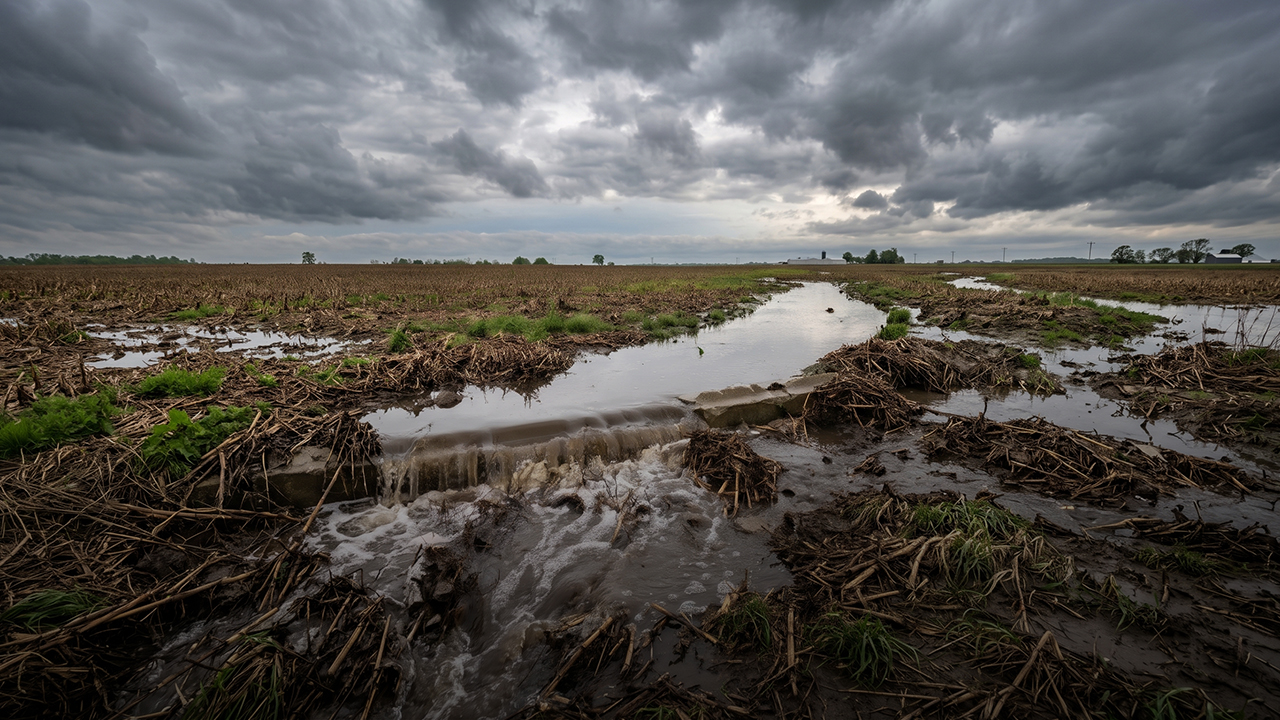
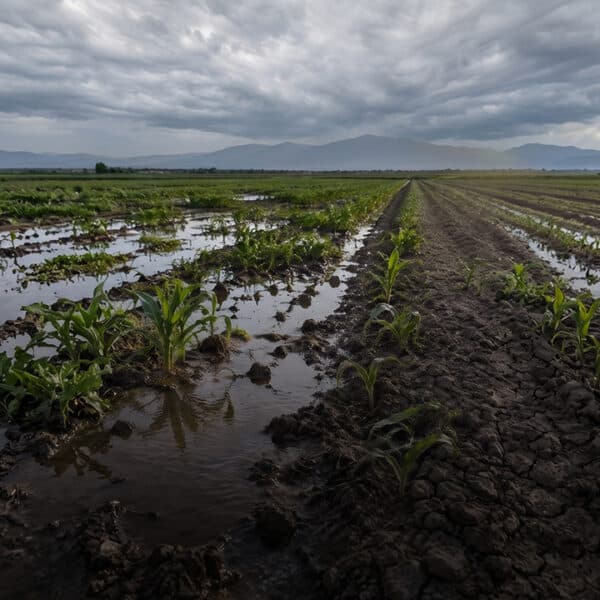
Excessive rainfall in agriculture can harm crops even when fields are not visibly flooded. After several weeks of mostly dry weather, the first period of steady rainfall is a source of relief. By the fifth day of rain, a farmer who is walking through the field might notice that the soil has ceased to absorb water, even though the crops are nowhere near being submerged.
Excessive rainfall in agriculture means that more water reaches the land than the soil is able to hold, drain or make use of, and it can damage crops long before the field appears to be flooded. The harm usually starts below ground, since plant roots need both air and water. It can then affect the nutrients, the structure of the soil, and the timing of planting and harvesting. The following article describes what occurs in wet soil, how it compares with drought, and which farming practices might be helpful, on the basis of advice from university extension services and the USDA.
Excessive Rainfall in Agriculture and the Oxygen Problem
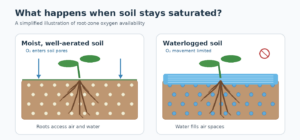
The University of Missouri (MU) Extension distinguishes between two closely related issues: flooding causes plants to be submerged, and waterlogging fills soil pores, the small spaces between soil particles that normally contain air, with water. In both cases, the amount of oxygen in the root zone, that is, the layer of soil in which the roots grow, is reduced, which in turn interferes with growth and lowers the yields.
The University of California Agriculture and Natural Resources (UC ANR) sets out the same argument from the point of view of irrigation, stating that if the soil remains too wet for long periods it cuts the roots off from both oxygen and carbon dioxide; this is the way in which excessive rainfall in agriculture can damage a crop whose leaves are well above the water.
In corn, the effects can develop quickly; according to MU Extension, oxygen deprivation can occur within 24 to 48 hours, causing a reduction in root growth and in the uptake of nitrogen, namely the nitrogen that the roots take in. The report also states that prolonged flooding can reduce the potential yield of corn by 7 to 20 percent. The yield graph in the report is based on a 2017 study conducted on poorly drained claypan soils, which have a dense layer of clay that drains slowly, in northeastern Missouri. These figures represent a serious example, not a prediction applicable to every crop or field.
Growth Stage and Crop Type Change the Damage
The impact of excessive rainfall in agriculture varies by crop and growth stage. According to MU Extension, crops are most at risk during the early vegetative and reproductive stages, and each additional day of flooding reduces their potential yield. Corn in particular is very sensitive between VE and V6, that period extending from seedling emergence to about the sixth leaf. The same report states that warmer temperatures increase both the stress on the plants and the severity of plant diseases.
Soybeans react in a different way; according to MU Extension, they can tolerate short periods of soil saturation from germination up to the V3 stage but still suffer a loss in yield if the flooding continues. In cases of flooding between the V2 and V5 stages, the Extension reports losses of one to three bushels per acre per day, mainly because fewer plants survive.
Excessive rainfall in agriculture also increases the risk of disease. Mandy Bish, a plant pathologist with MU Extension, states that soybean seedlings are susceptible to infections by Pythium, Phytophthora and Rhizoctonia. The report adds that in the case of wheat, extended periods of wet weather raise the risk of mycotoxins (toxins produced by fungi) associated with Fusarium head blight also known as wheat scab.
Too Much Water and Too Little Water Compared
Drought and excessive rainfall in agriculture may seem like opposites, but both can disrupt the functions of roots. UC ANR states that when the amount of moisture in the soil goes below the level that a crop can tolerate, transpiration (the process of water moving up through the plant and exiting the leaves), photosynthesis and other processes decline as a result, leading to a reduced yield. With regard to wet conditions, soil that remains saturated limits the oxygen available to the roots. UC ANR also says that keeping the root zone both moist and well aerated most of the time can help support yield and quality.
The sources indicate that drought is the greater threat, with wet stress coming a close second. MU Extension states that flooding is the second most significant type of abiotic stress, behind drought, where abiotic stress refers to stresses on plants that arise from non-living factors such as weather. It also mentions that the overall impacts are increasing as extreme rainfall occurs more frequently.
Drought and excessive rainfall in agriculture can also occur in succession. Andre Reis, who is a specialist with MU Extension, cautions that early-season flooding could lead to difficulties later on if a summer drought then sets in. He mentions that root development may be restricted and that soybean nodulation might be affected, meaning the formation of root nodules that host nitrogen-fixing bacteria. Plants thus may not be as well prepared when a dry period comes after a season of excessive rainfall.
Nitrogen, Soil and Fieldwork Take Losses Too
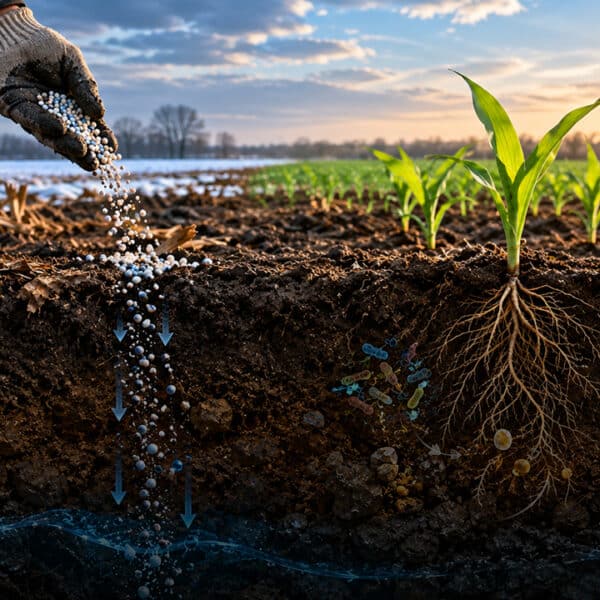
Excessive rainfall in agriculture causes problems beyond damage to the roots. According to Gurbir Singh, a soil scientist with MU Extension, waterlogged soils accelerate denitrification, a process in which soil microbes turn nitrate into nitrogen gas which then escapes into the atmosphere, and they also increase leaching, whereby nitrogen is carried below the root zone with the draining water, and runoff, which transports it across the surface.
MU Extension states that splitting nitrogen applications over time can help reduce these losses, but the decision should take into account the timing, the duration, and the expected returns. Kelly Nelson, who is an agronomist with MU Extension, says that corn could still benefit from rescue nitrogen if the earlier applications have been lost. According to his research, nitrogen applications can still be beneficial up to the point of silking, that is, when the corn silks emerge, although they do not completely restore the yield potential.
A third cost of excessive rainfall in agriculture is reduced field access. According to the Virginia Cooperative Extension, drainage can create trafficable conditions (ground firm enough to allow machinery to operate) during important periods such as planting or harvesting. The Illinois Drainage Guide, however, recommends against grading wet fields since working wet soil deteriorates its physical structure; this type of damage is usually referred to as compaction, which occurs when soil particles are pressed together and the pore space decreases.
Surface Drainage Moves Ponded Water Away
Managing excessive rainfall in agriculture often begins with the flow of water across the surface. According to the Illinois Drainage Guide, published by the University of Illinois Department of Agricultural and Biological Engineering, surface drainage refers to the removal of water that has collected on the land surface.
It involves the use of shallow ditches and should include land smoothing or land grading, whereby the field is reshaped using tractors and scrapers to achieve the desired slopes. The guide states that this method is appropriate for soils that allow water to pass through slowly, such as those having a clay subsoil. With regard to most row crops, the guide indicates that the system should be able to remove excess water within 24 to 48 hours.
That window is consistent with the 24 to 48 hours mentioned in the earlier corn finding. Although the two figures represent different things, together they indicate why water which stays for days should be taken into account in any plan concerning excessive rainfall in agriculture.
The guide mentions three operating parts: field ditches, which are shallow ditches designed to collect water from the lowest areas in the field; lateral ditches, which gather this water or water from the field surface and transport it onward; and the outlet channel, which receives the water at the end of the system.
The guide states that a topographic survey should be conducted and a contour map prepared before a system is designed. Since small silt deposits can greatly reduce a system’s capacity, the ditches should be inspected after each heavy rain. Furthermore, Virginia Cooperative Extension points out that drainage design and management can have environmental consequences, so it is worth seeking local advice.
Healthy Soil Takes In More Water
The way in which soil is managed affects the level of damage caused by excessive rainfall in agriculture. According to the USDA Natural Resources Conservation Service (NRCS), healthy soils have a greater capacity to hold water and are therefore less prone to runoff and erosion. The NRCS also states that healthy soil can act as a buffer against extreme precipitation, whether the weather is too wet or too dry. This buffering action reduces the impact of such extremes without eliminating them, so even well-managed soil does have its limits.
Managing excessive rainfall in agriculture also depends on infiltration, that is, the rate at which water penetrates the soil. The NRCS states that tillage, particularly during the warmer months, decreases infiltration and leads to an increase in runoff. Cover crops, which are sown between the growing seasons of cash crops in order to protect and nourish the soil, can enhance infiltration, and deeply rooted crops such as forage radishes produce natural channels for water.
The NRCS also says that soil which is covered throughout the year is far less prone to erosion by both wind and water, and that cover crops protect the soil from the impact of heavy rainfall. Soils that have been managed using reduced tillage or no-till for several years have a greater amount of organic matter and moisture available to plants, so the advantages develop over time.
Soil Moisture Sensors and Field Checks
During excessive rainfall in agriculture, farmers can still check soil conditions directly. According to UC ANR, the best results when deciding when to irrigate usually come from combining the use of soil moisture sensors with field observations, for example by using a probe to check the soil. However, it warns that irrigating on a set schedule, like every four days, generally results in the soil being either too wet or too dry since the weather changes in an irregular manner. When there is a period of rain, a sensor reading may indicate that there is already sufficient water in the root zone.
When assessing excessive rainfall in agriculture, a sensor can only measure soil moisture at the spot where it is placed. UC ANR suggests that separate sensors should be used for blocks that have different cultivars, soil types or planting dates. This advice is directed at berry and vegetable farming in Ventura County, California, and relates to a sensor known as a tensiometer, which measures how strongly the soil retains water. Farmers in other areas should check to see what works best with their own crops and soils.
Tracing One Puddle to Its Cause
Picture a farmer who notices that water collects in one corner of his field after each heavy rain. This is a small-scale example of excessive rainfall in agriculture. Rather than altering the entire field, he starts by measuring how long the water remains. If it clears within 24 to 48 hours, the period given by the Illinois guide as a target for row crops, the issue may be minor. If it remains longer, he checks whether silt or brush has blocked a nearby ditch or outlet and whether the soil itself drains slowly.
A simple elevation survey may reveal a shallow depression. In that case, the solution might be to clear the outlet, carry out minor grading once the soil is dry, or change where machinery travels rather than install an expensive new drainage system. This is an illustrative example, not a case taken from the sources.
Protecting Crops From Excessive Rainfall in Agriculture
Excessive rainfall in agriculture can deprive roots of oxygen, cause nitrogen losses, damage soil and delay fieldwork. According to extension and USDA sources, flooding ranks second only to drought among abiotic stresses on crops, so it remains a significant threat even if drought poses the greater risk. Surface drainage, healthy soil management and moisture monitoring can each help reduce the damage. The most suitable approach will depend on the farm, its soil and local conditions, so growers should seek advice from their local extension office before making changes.