


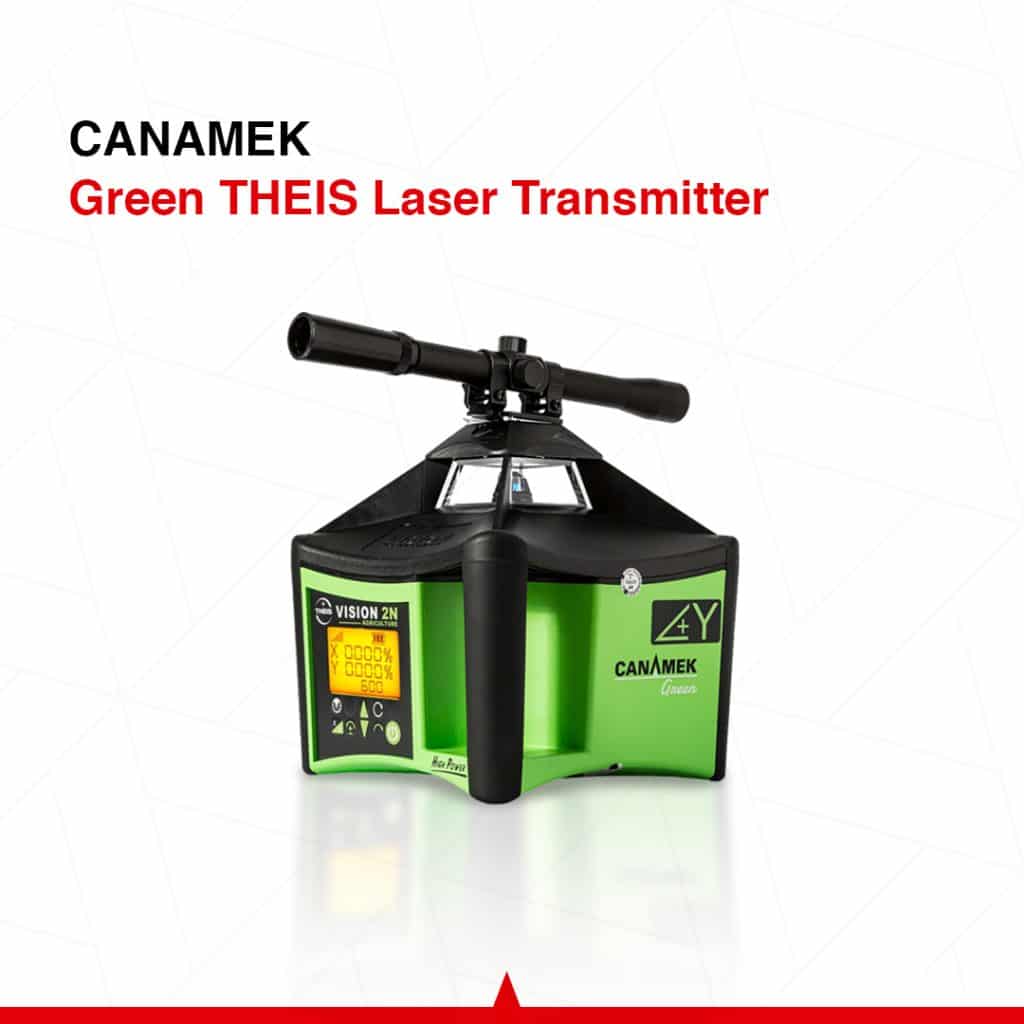
Theis Vision 2N Agriculture Dual Slope Rotary Laser Transmitter
- Set positive or negative grades up to ±15% independently on the X and Y axes.
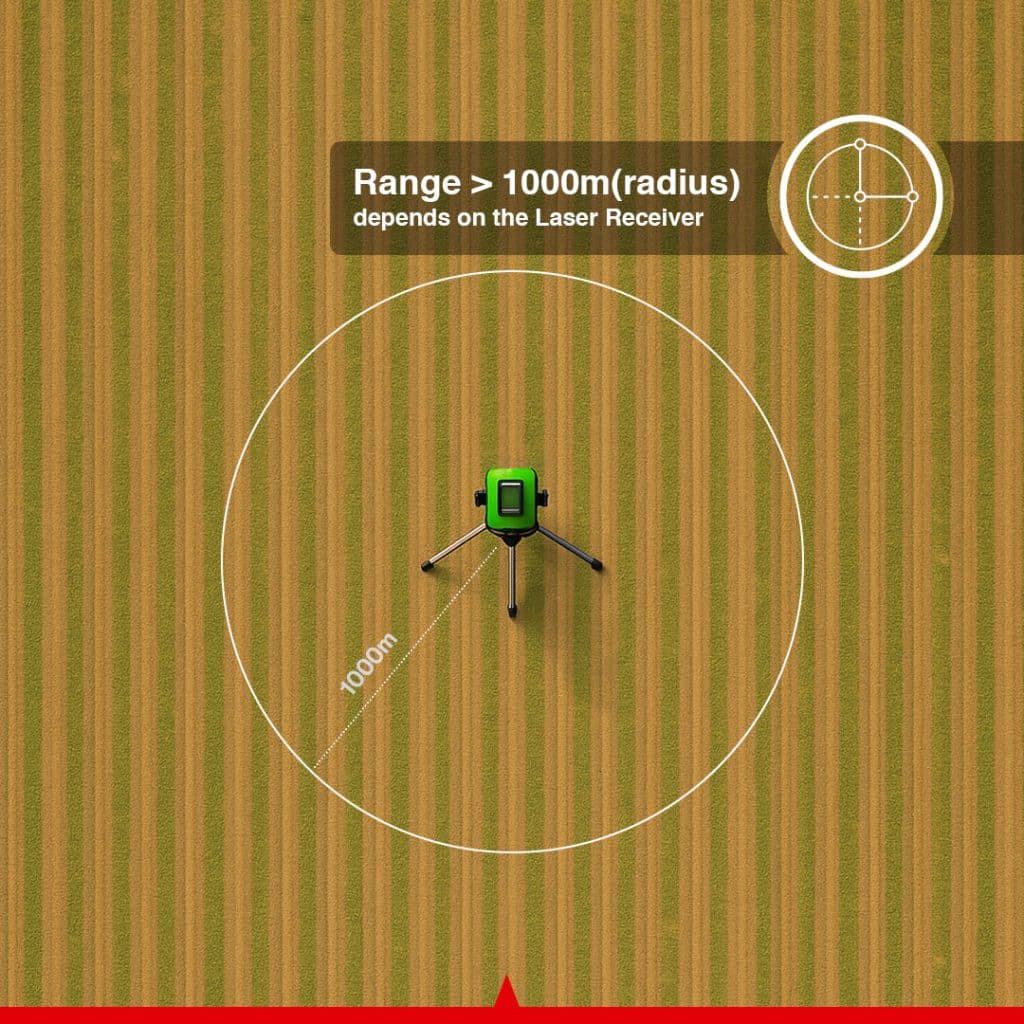
- Establish a working reference across a 3,281 ft / 1,000 m radius with a compatible receiver.
- AutoSlope monitors and adjusts the laser plane; TILT interrupts operation after a major position change.
- Included telescope and FB-V radio remote support alignment, setting changes and status monitoring.
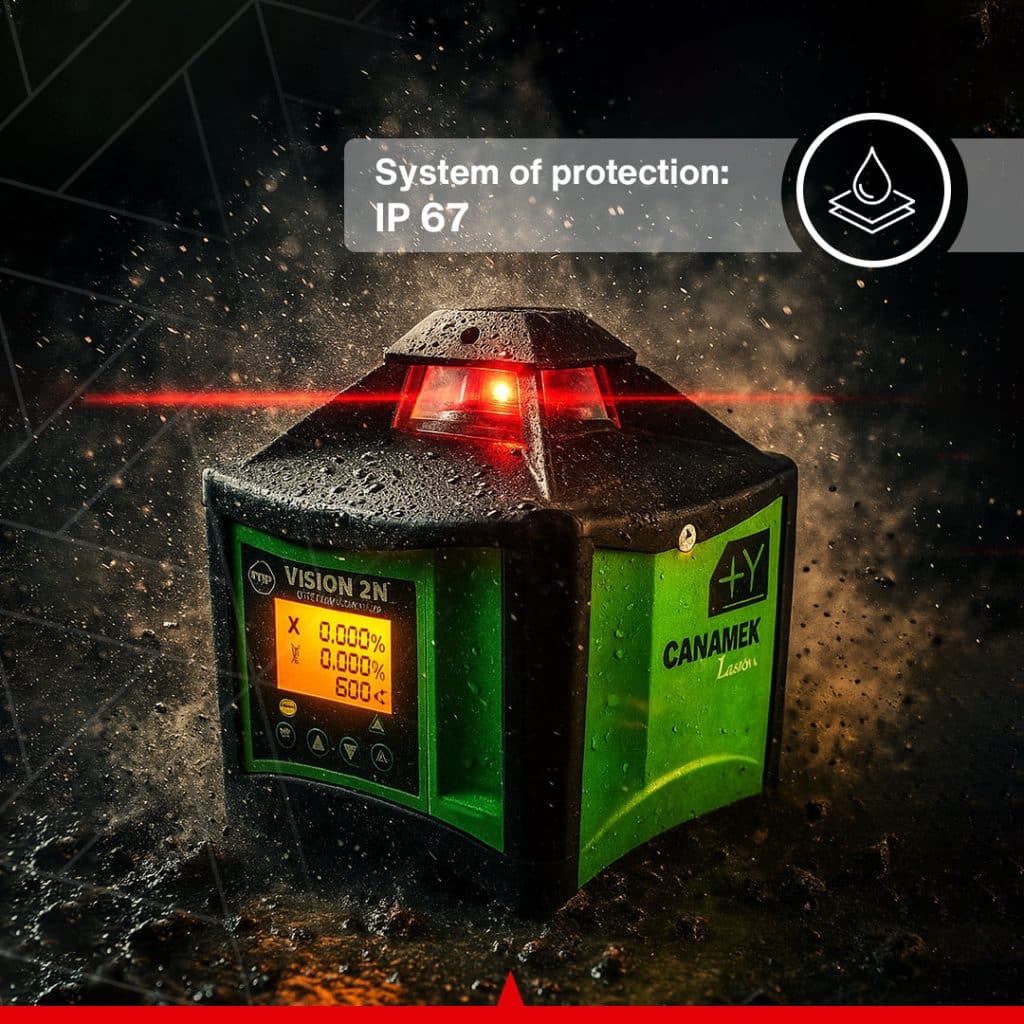
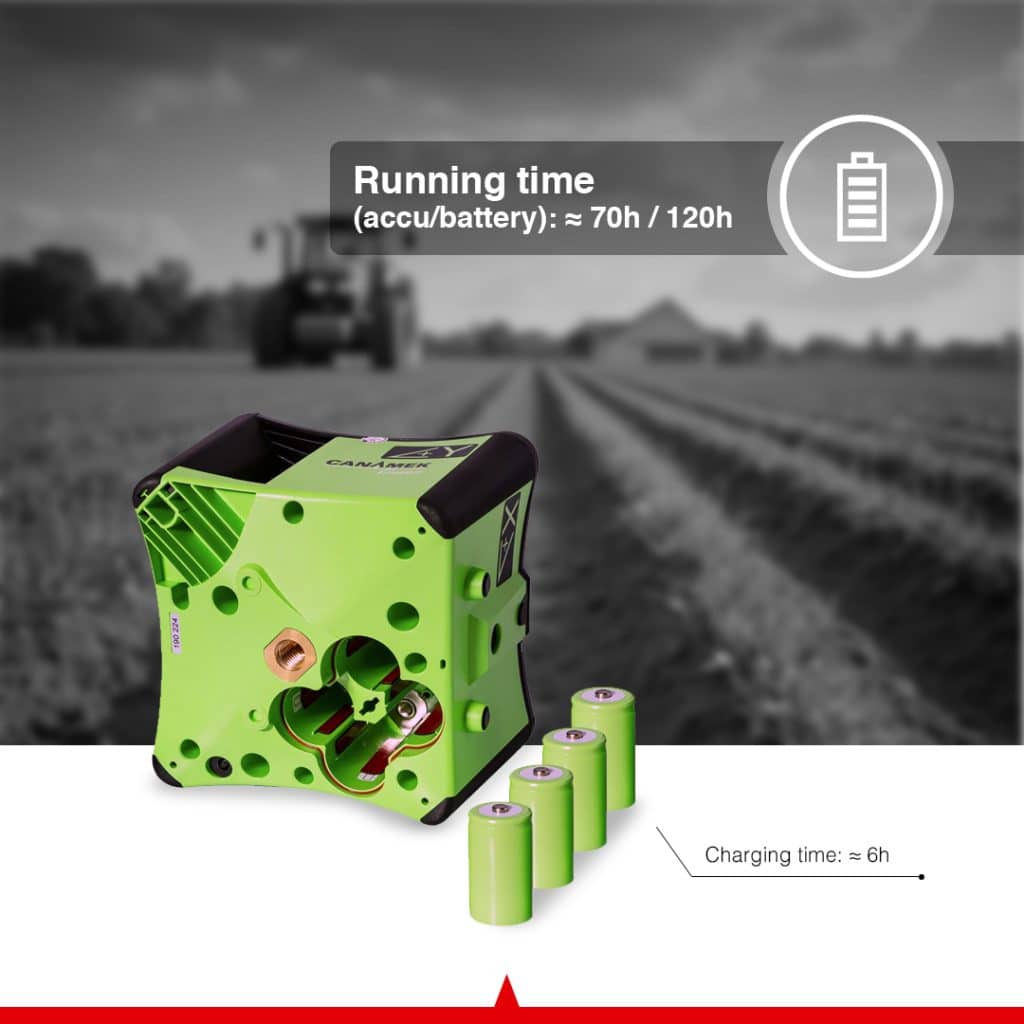
- IP67 protection and approximately 70 hours of rechargeable-battery operation support outdoor field work.
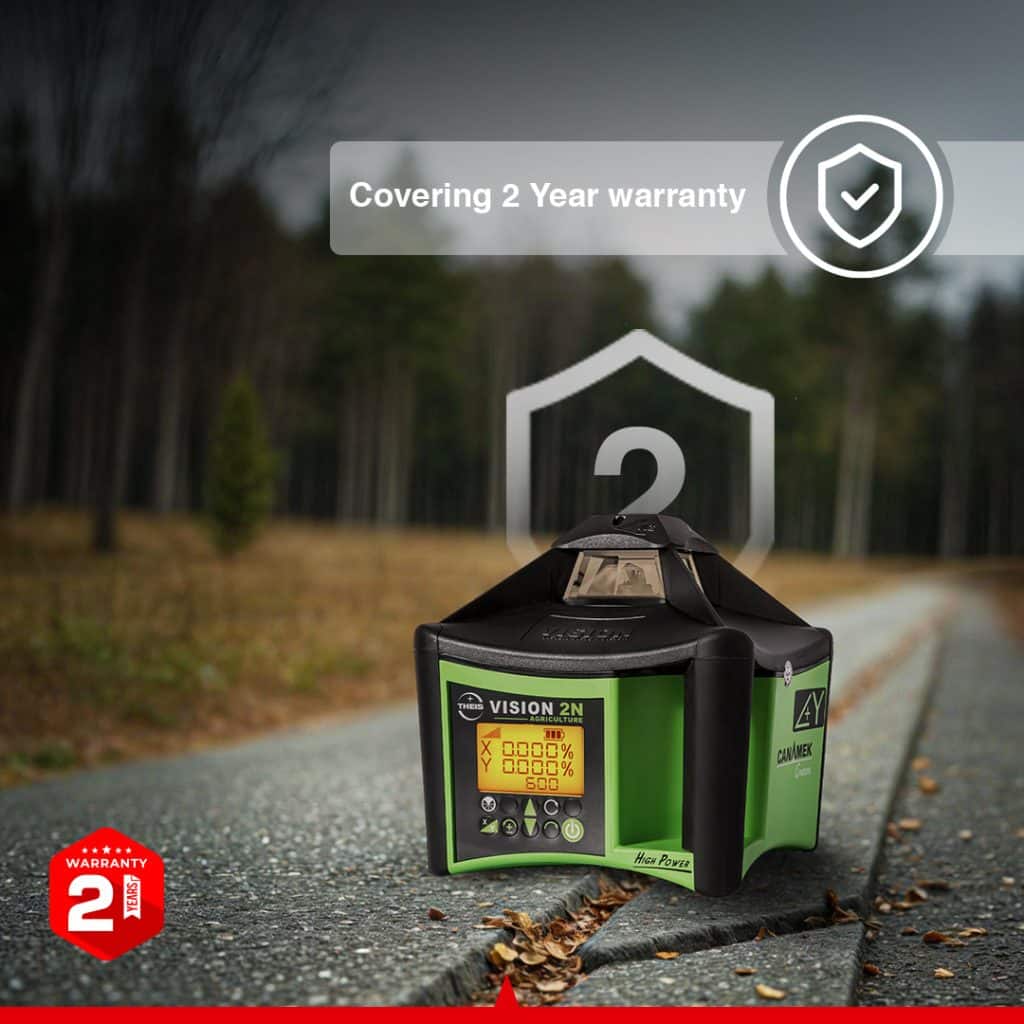
- 2-Year Free Warranty
- Made in Germany
- After-Sales Support, 7 Days a Week
Ships in 24h
Extend to 5
Available add-on
Theis Vision 2N Agriculture Dual Slope Rotary Laser Transmitter
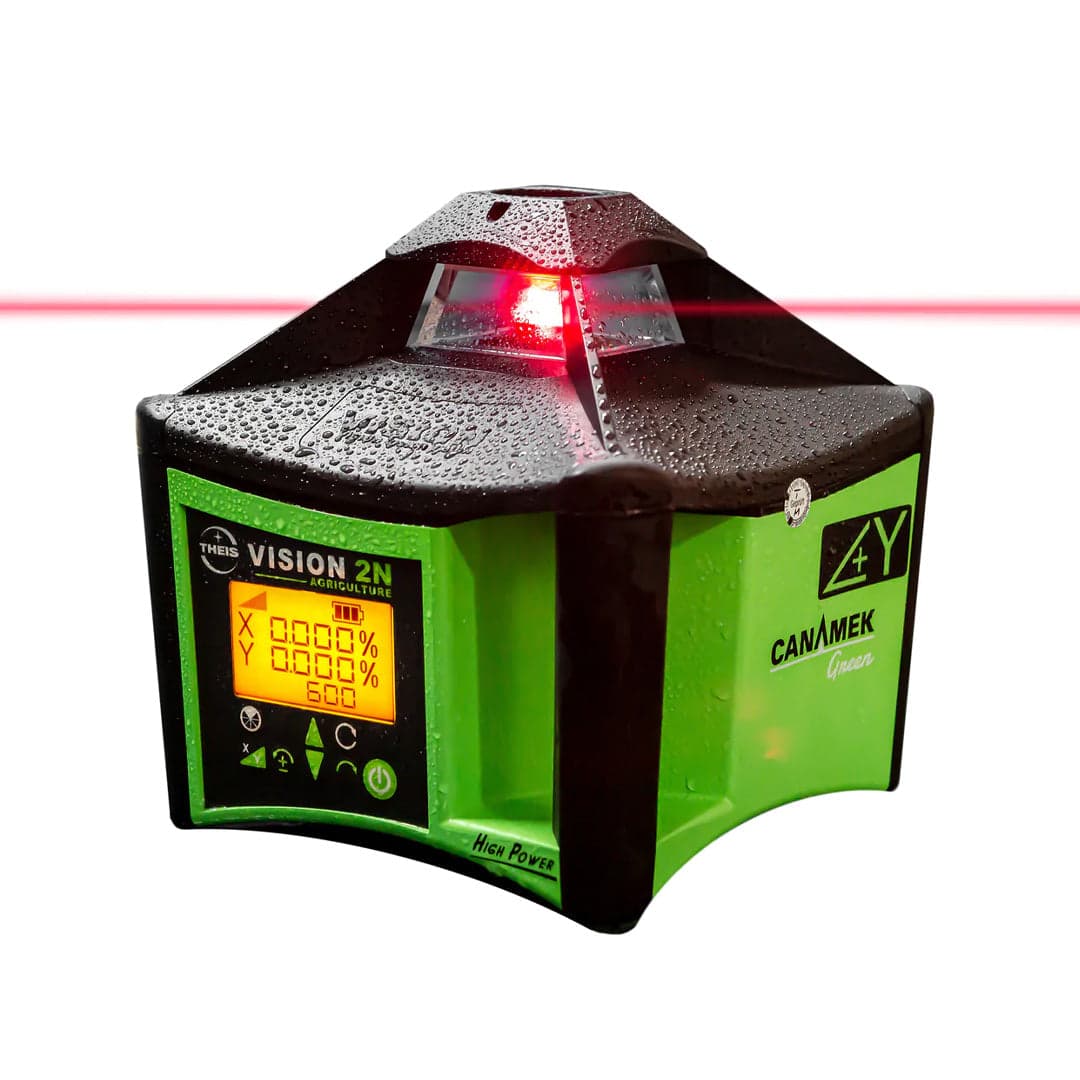
The Theis Vision 2N Agriculture Dual Slope Rotary Laser Transmitter establishes a horizontal, single-slope or dual-slope reference plane for land leveling and related grading work. Independent X- and Y-axis settings allow positive or negative grades up to ±15%, while AutoSlope electronically monitors the laser plane and initiates adjustment when its position changes.
Designed for agricultural applications, this dual slope rotary laser transmitter supplies the reference used by a compatible laser receiver. The receiver and, where required, a separate machine-control system translate that reference into grade information or automatic blade corrections. This arrangement suits field leveling, irrigation preparation, surface drainage and compatible agricultural or construction earthmoving equipment.
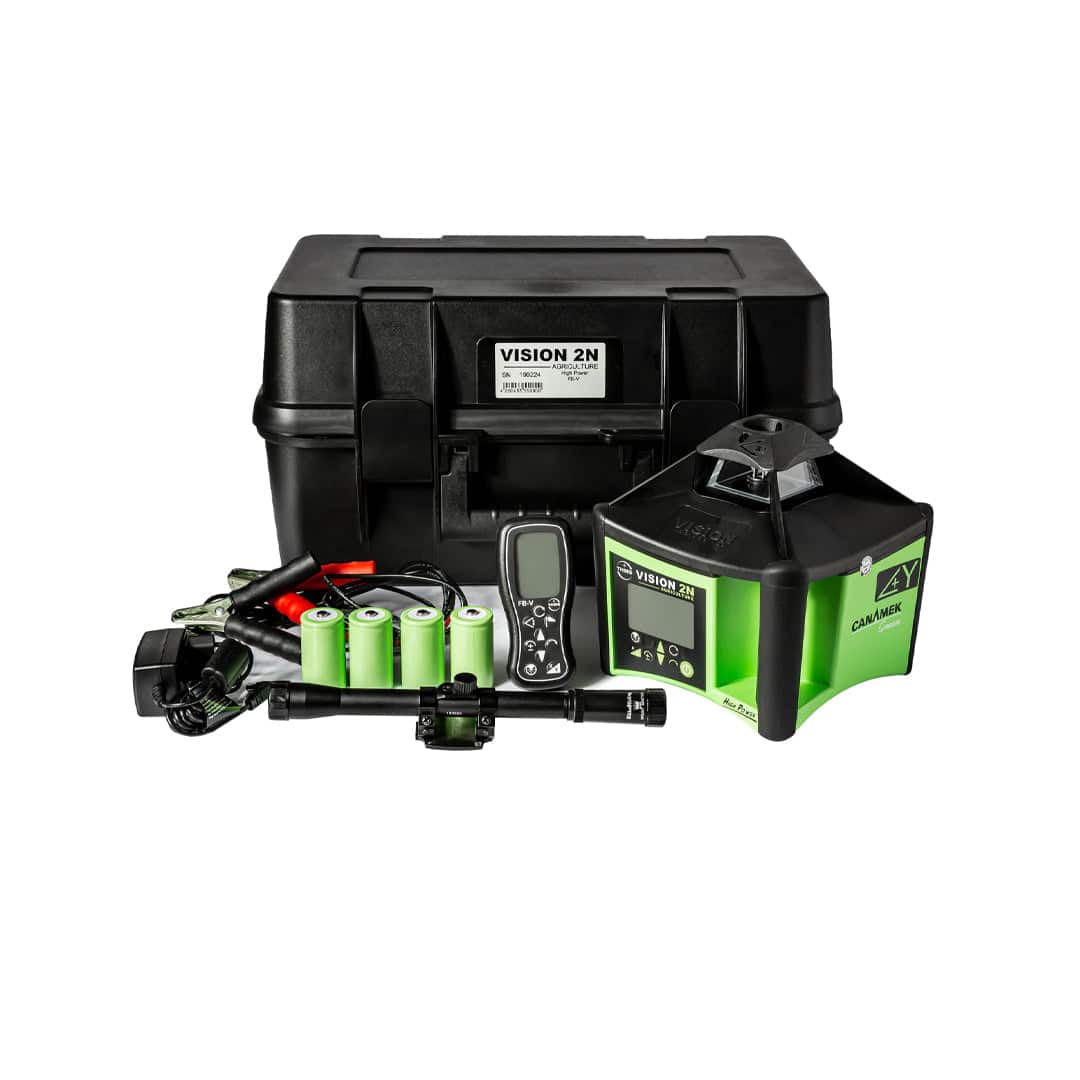
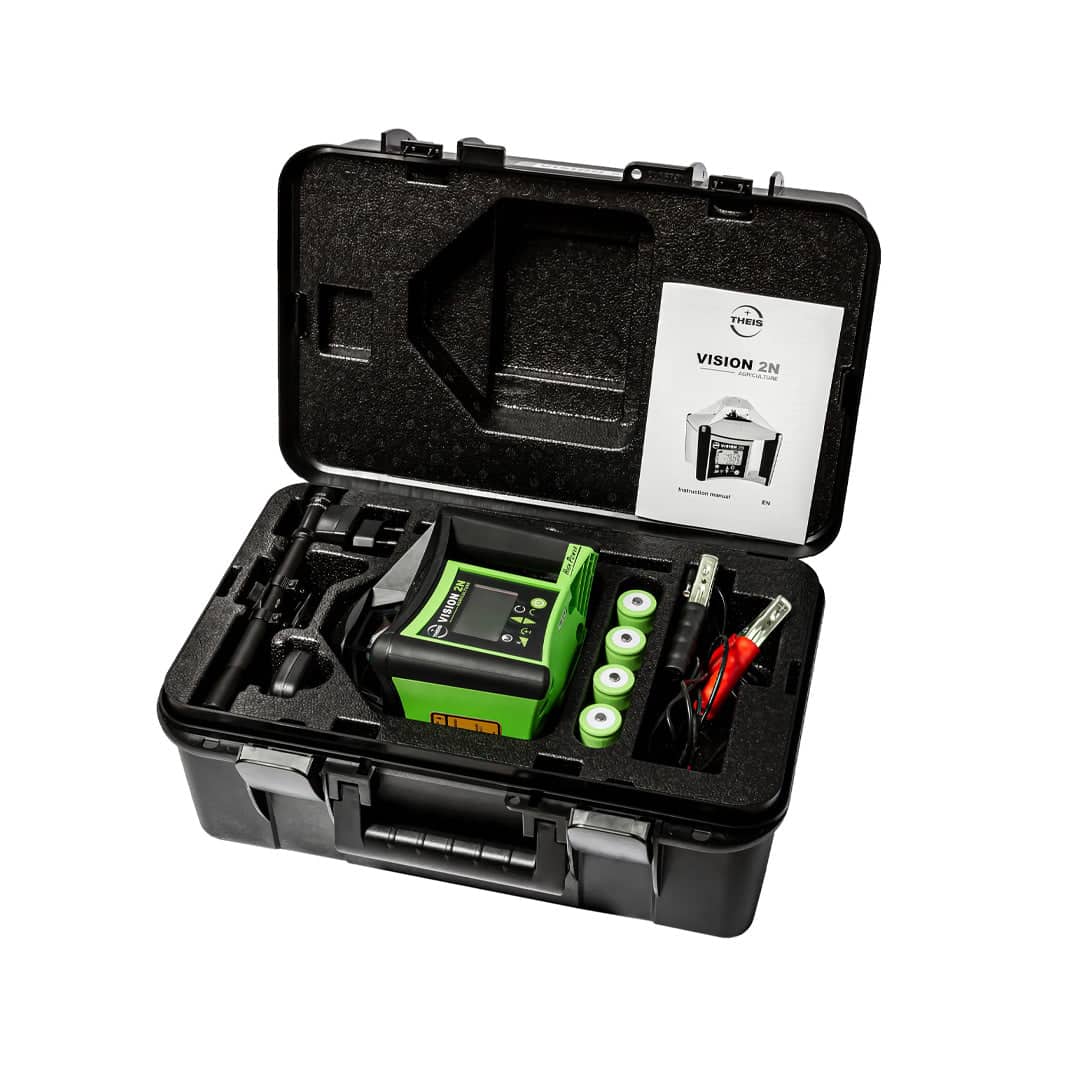
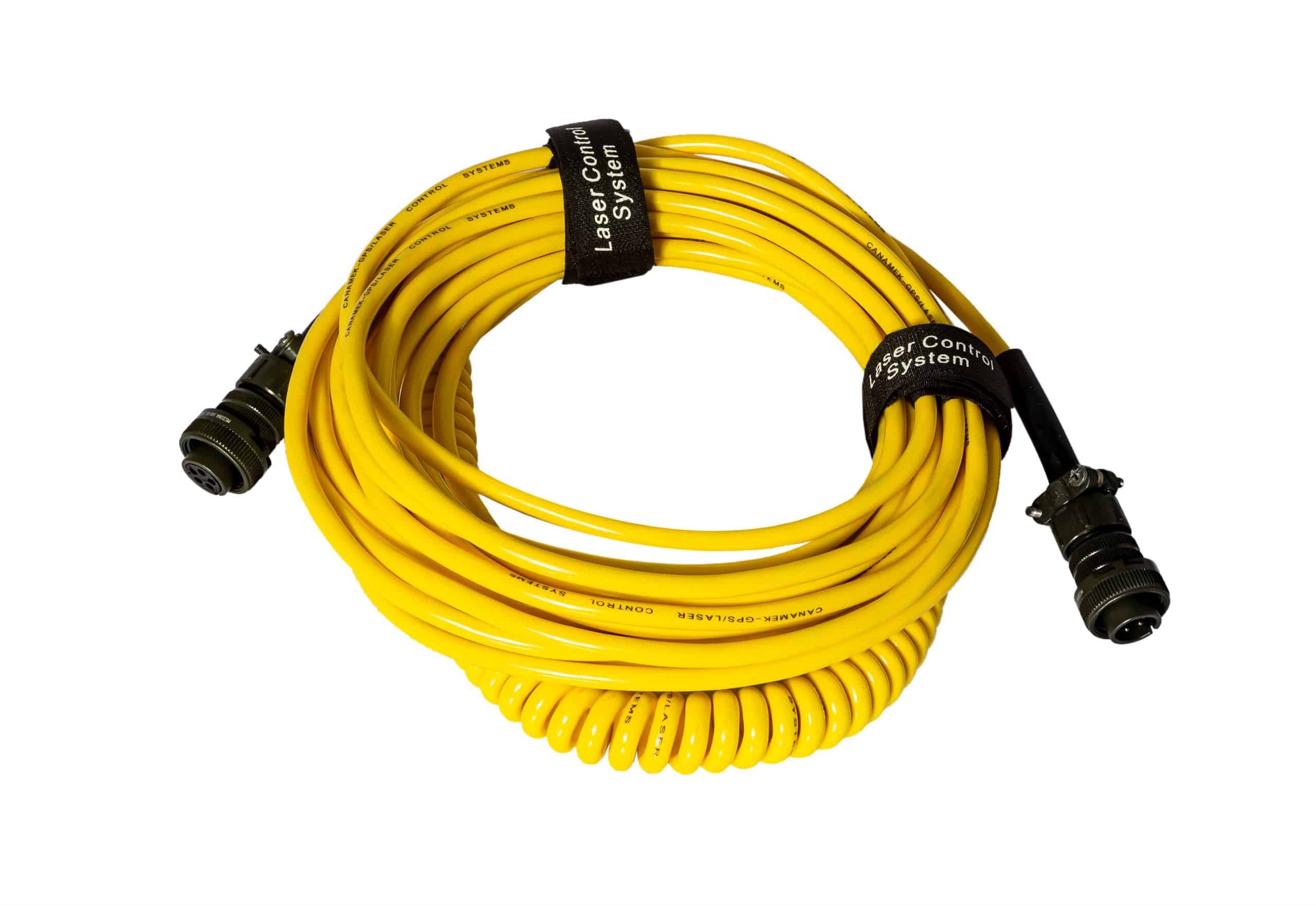
The CANAMEK transmitter package includes the Vision 2N Agriculture laser, telescope, FB-V radio remote, rechargeable NiMH battery, charger, 12 V battery cable and ABS carry case. A 3,281 ft / 1,000 m working radius, stored slope values, beam masking and an illuminated display support field setup and operation. German manufacture is combined with a 2-year warranty and CANAMEK after-sales support seven days a week.
Complete Laser Reference and Grading Workflow
- Establish the setup position. Mount the transmitter securely on a suitable tripod and align the tripod head carefully. Accurate setup helps make the available slope range usable and establishes the correct reference height and direction.
- Allow automatic leveling. Switch on the transmitter and wait for leveling to finish. The laser begins rotating once horizontal leveling is complete; the self-leveling range is ±5°.
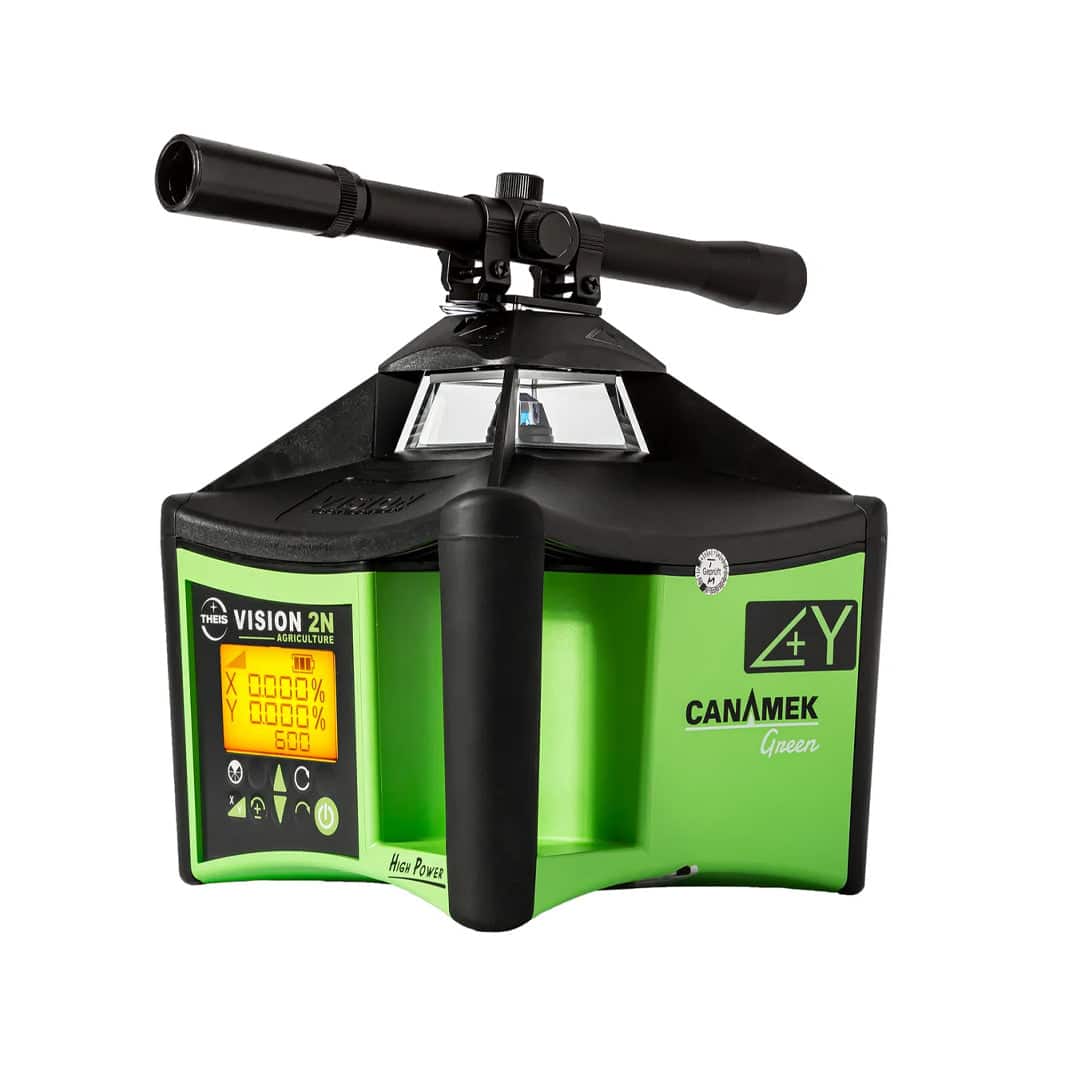
- Align the grading axes. Use the telescope to assist orientation toward the intended target direction. Enter the required X and Y grades, including their positive or negative signs, or use a horizontal reference.
- Select the operating settings. Choose a suitable rotation speed, configure beam masking if required, and check the grade values and status on the transmitter or radio remote.
- Receive the reference at the work area. Use a compatible receiver for grade checking or connect the reference to a suitable machine receiver and control system for grading.
- Monitor the reference during work. AutoSlope manages adjustments within its operating capability. If TILT responds to a major movement, recheck the transmitter’s position, elevation and direction before restarting work.
The transmitter establishes the reference plane; the selected receiver, machine controls and implement determine how that reference is used at the work point.
Package Contents and Equipment Selection
Included Transmitter Package
| Component | Quantity | Purpose |
|---|---|---|
| Theis Vision 2N Agriculture dual-grade laser | 1 | Generates the horizontal or sloped rotary laser reference with AutoSlope monitoring |
| Telescope | 1 | Assists alignment of the transmitter with the intended grading direction |
| FB-V radio remote control | 1 | Provides bidirectional remote operation and a display of transmitter information |
| Rechargeable NiMH battery set | 1 | Supplies rechargeable operating power |
| Charger | 1 | Charges the rechargeable battery set |
| 12 V battery cable | 1 | Included battery-connection accessory |
| ABS carry case | 1 | Protects the equipment during storage and transport |
Equipment Required for Field Use
A suitable tripod or stable mounting arrangement and a compatible laser receiver are required for the intended field workflow. Automatic blade control also requires an appropriate machine-mounted receiver, control box, hydraulic or actuator interface, and compatible implement.
The transmitter package supplies the laser reference equipment and the accessories listed above. A tripod, grade receiver, machine-control system, hydraulic valve, hoses and grading implement are separate purchases.
Selecting a Transmitter or a Complete Leveling Package
This transmitter kit suits buyers who already have compatible receiving equipment or who are assembling a machine-control installation. Buyers needing additional receiving and machine-control components can review the Laser Land Leveling Complete Starter Package 2, which combines this THEIS transmitter with CANAMEK control equipment and field-setup components.
For other configurations, the CANAMEK laser land leveling systems range provides related control systems and packages. Select the receiving and machine-control equipment according to the application and machine requirements.
Independent Dual-Axis Grade Settings
The Vision 2N Agriculture allows separate slope entry on the X and Y axes, with a range of ±15% on each axis. The operator can establish a level plane, a fall in one direction, or a plane with grades in two directions. Positive and negative settings determine the direction of the required fall relative to the aligned axes.
The illuminated display shows both entered grade values. Slope values from the previous use are stored and can be recalled, helping the operator return to a known setting while verifying the current setup position and orientation.
Independent grade entry supports planned irrigation and drainage layouts where a single horizontal plane is insufficient. The transmitter supplies the selected planar reference; the suitability of that reference depends on the project’s grade requirements.
AutoSlope Monitoring and Automatic Adjustment
AutoSlope electronically monitors the position of the laser plane during slope operation. When external influences change the reference, the system detects the change and initiates adjustment. This supports continued use of the selected grade without requiring every small correction to be made manually at the transmitter.
The operator enters the required grades and monitors the displayed status while the instrument approaches and maintains the setting. Larger disturbances trigger interruption and warning behavior, allowing the setup to be checked before work resumes.
AutoSlope controls the transmitter’s reference plane. Automatic blade movement is performed by a separate compatible machine-control installation receiving that reference.
Automatic Leveling and Defined Accuracy Conditions
Automatic horizontal leveling operates within ±5°. If the initial tripod inclination exceeds the leveling capability, the instrument indicates an alarm and the tripod must be realigned. Careful tripod alignment also helps the transmitter achieve the required grade settings.
The stated leveling accuracy is ±0.059 in at 98.43 ft / ±1.5 mm at 30 m. The manual specifies this value at 68°F / 20°C, parallel to the main X and Y axes.
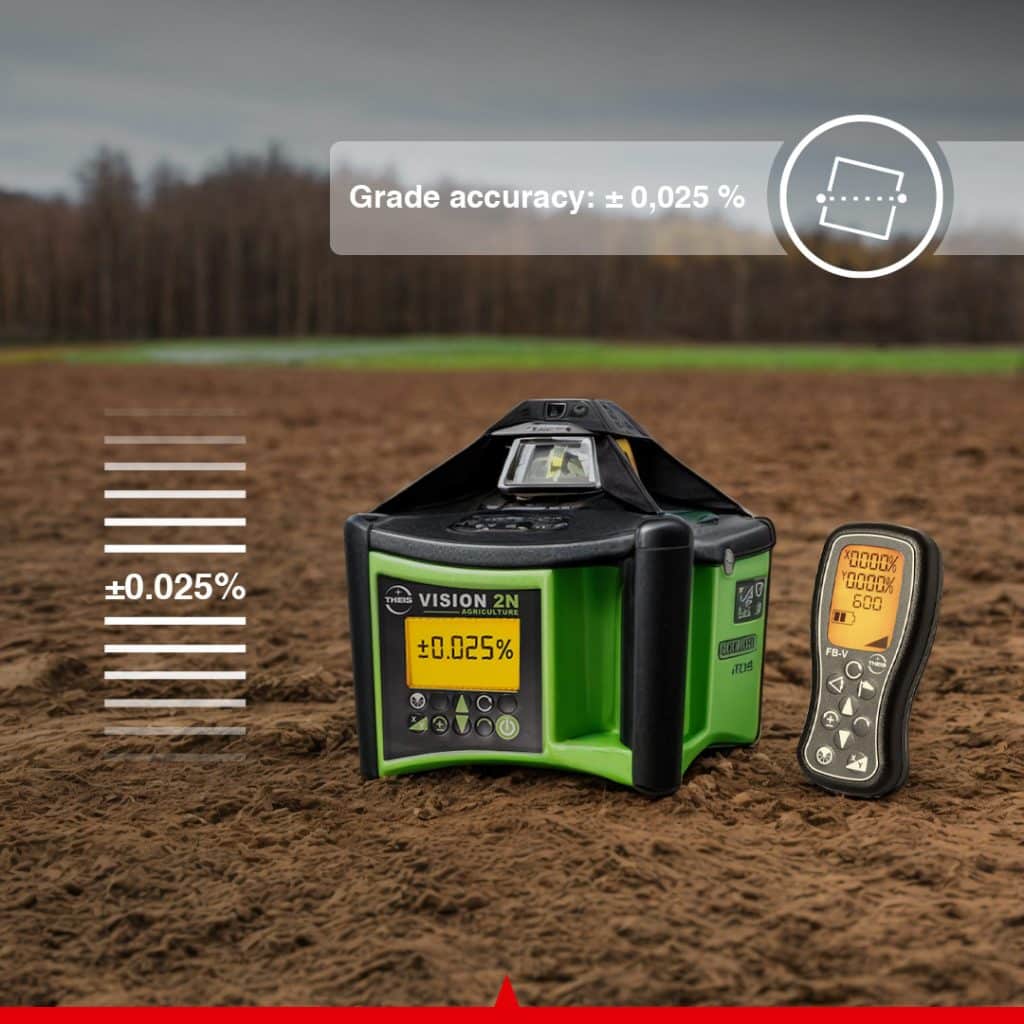
Grade accuracy is ±0.025% for grades up to 5%, at 68°F / 20°C, parallel to the main axes and without lateral slope. This accuracy condition is distinct from the available ±15% grade-setting range. The transmitter specification also remains separate from receiver tolerance, machine response and the resulting finished-surface accuracy.
TILT Monitoring for Major Position Changes
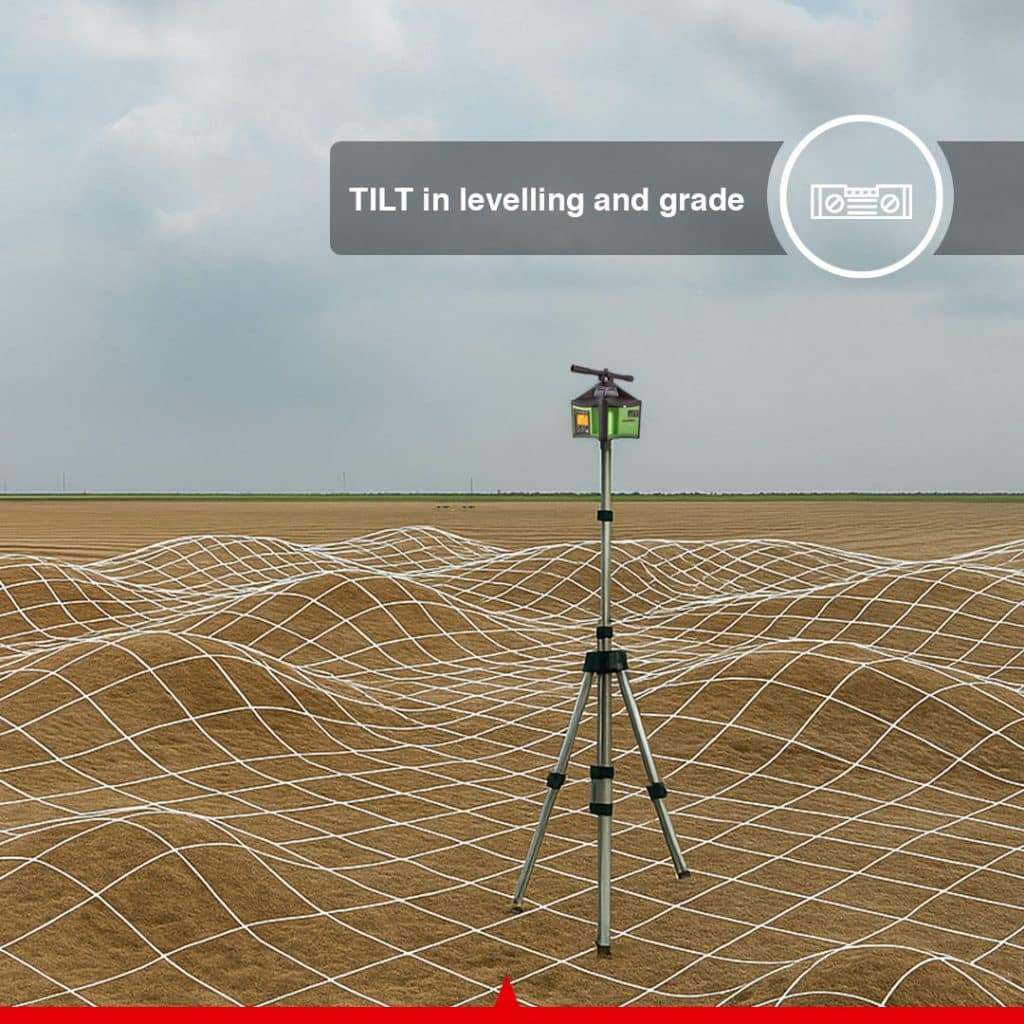
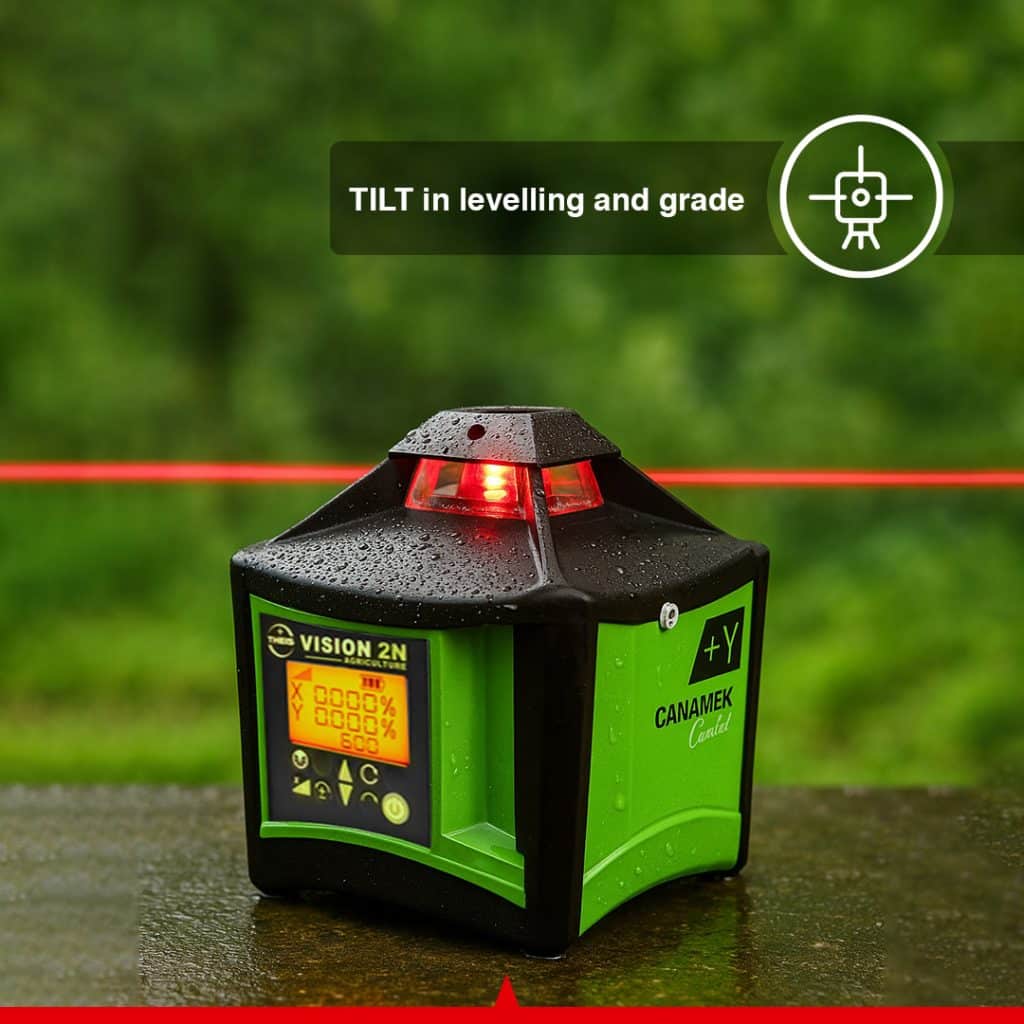
A displaced tripod leg or another substantial change in mounting position can alter the reference used across the work area. The TILT function interrupts normal operation and provides a warning through the flashing laser and warning indication after a major disturbance.
The operator must check the mounting position and re-establish the correct elevation and direction before restarting. This helps identify a disturbed setup before the reference is used for further grading.
Windy Function for Minor Disturbances
The integrated Windy function extends the readjustment range in leveling and grade operation. It is intended to support continued work when wind, vibration or slight shocks affect the setup within the function’s capability.
This behavior helps the transmitter accommodate minor disturbances during outdoor work. A stable tripod and correct positioning remain necessary, and a major movement still requires the setup to be checked.
Working Radius and Receiver Selection
The transmitter has a working radius of 3,281 ft / 1,000 m. This is the distance from the transmitter to the receiving location. The corresponding full diameter is approximately 6,562 ft / 2,000 m, calculated from the stated radius.
Usable range depends on the receiver and operating conditions. Receiver compatibility, a clear beam path and correct setup are therefore part of selecting the working arrangement. The laser emits at 635–660 nm and requires receiving equipment suitable for that rotary laser signal.
The optical working radius and radio remote range are different specifications. The FB-V remote has an approximate range of 656 ft / 200 m under the manual’s stated conditions.
Rotation Control and Directional Beam Masking
The transmitter provides rotation settings of 0, 300, 600 and 1,000 rpm in the operating instructions. At 0 rpm, the laser dot can be positioned clockwise or counterclockwise using the step controls. A starting rotation speed can also be selected in the settings menu.
Mask mode switches off a selected angular portion of the rotating beam. The masked area can be set from 90° to 270° and rotated to the required direction. The display distinguishes the masked sector from the area where the beam remains active.
This allows the operator to direct the usable reference toward the required working area. Masking operates with the rotating beam, and its setting must leave the receiving locations within the active sector.
Included FB-V Radio Remote Control
The FB-V communicates with the transmitter in both directions. Its illuminated display shows the information available on the laser’s display, allowing the operator to view grade values and operating status while using the corresponding control keys away from the instrument.
The radio connection supports automatic channel selection or manual selection from channels 1–16. The remote can also place the transmitter in standby and wake it when the standby function is enabled. This is useful when settings must be checked or changed during field setup within radio range.
The remote’s approximate operating range is 656 ft / 200 m under optimum atmospheric and operating conditions at 68°F / 20°C. It uses two AAA alkaline batteries and has an approximate operating time of 60 hours.
Rechargeable Power and Alkaline Battery Operation
The transmitter supports rechargeable NiMH power or four alkaline D cells. Approximate operating time is 70 hours with the rechargeable battery and 120 hours with alkaline batteries under optimum conditions; the rechargeable runtime is specified at 68°F / 20°C. Approximate recharge time is six hours.
A battery indicator provides operating-status information, and the transmitter shuts down automatically after the battery becomes depleted. Rechargeable-battery charging is possible during operation when the specified charger is used in suitable dry conditions.
The manual calls for charging at room temperature and identifies charging below 41°F / 5°C as potentially damaging to the battery. Alkaline cells must not be recharged. These charging requirements are separate from the transmitter’s wider operating-temperature range.
Outdoor Protection and Transport
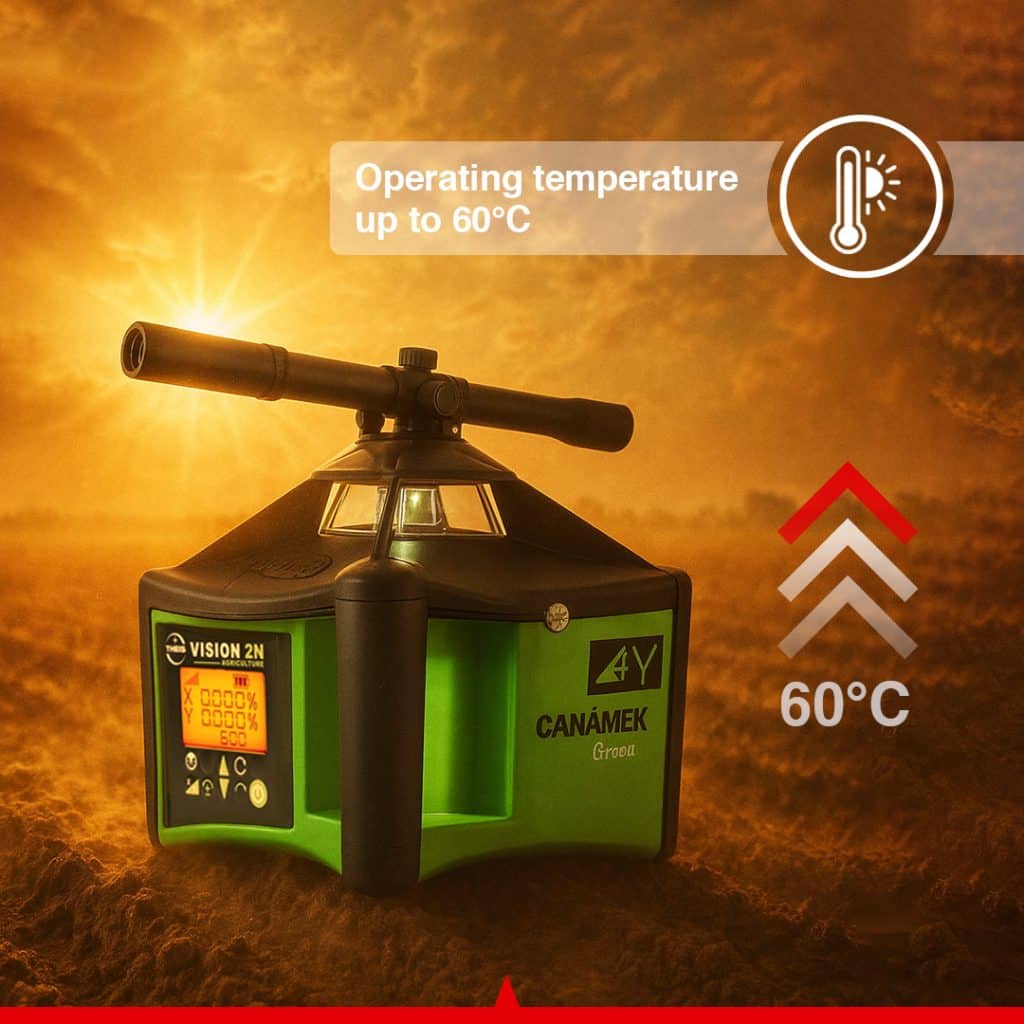
The Vision 2N Agriculture transmitter is rated IP67 and operates from 5°F to 140°F / −15°C to 60°C. Its approximate weight is 6.61 lb / 3 kg, and the included ABS case provides a dedicated storage and transport enclosure.
The stated protection rating applies to the transmitter. The manual instructs operators to dry the equipment before returning it to the case and to handle the laser window carefully. These practices support the condition of the instrument between field jobs.
Maintain the Planned Reference during Grading
Agricultural grading requires a reference that corresponds to the intended level or fall. Independent X/Y settings establish that plane, while AutoSlope monitors it and TILT identifies major position changes.
When used with an appropriate receiver and machine-control arrangement, these functions can help the operator maintain a more consistent relationship between the implement and the planned reference. The finished result depends on calibration, receiving equipment, machine response, material and operating conditions.
Support Surface Drainage and Irrigation Preparation
Water-management earthwork often requires a deliberate fall across a field or toward a planned outlet. The transmitter’s single- and dual-slope settings provide a reference for implementing those grades during land leveling.
A correctly designed and executed grade can support more consistent surface-water movement and may help reduce local low spots. Drainage performance also depends on the site design, outlet conditions, soil and completed earthwork.
Reduce Repeated Trips to the Transmitter
The radio remote brings the transmitter’s display and operating keys to the operator within the specified radio range. Stored slope values also allow previous settings to be recalled when a job uses the same values.
These functions can reduce trips back to the instrument for routine setting changes and status checks. The telescope, axis alignment and physical setup still establish the direction and position to which those settings apply.
Display Settings, Instrument Information and Support
The transmitter’s illuminated display presents X/Y grade values, rotation speed, battery status, leveling status and warning indications. Grade display can be set to percent or per mille, with percent as the default. Adjustable illumination intensity and timeout let the operator configure the display for the working environment.
The information menu provides the program version, six-digit factory number and accumulated operating hours. Configuration also includes radio channel selection, a radio-off setting, startup rotation speed and a standby duration of up to ten hours. A zero standby setting disables the function.
The FB-V has its own battery indication, adjustable illumination, automatic shutoff settings and instrument information. CANAMEK after-sales support is available seven days a week for assistance with the transmitter and its use in a compatible grading setup.
Solutions for Agricultural and Construction Grade References
The transmitter provides a level or sloped reference for agricultural land leveling, irrigation preparation, surface drainage, field renovation and related earthmoving. Its dual-axis settings are useful where the planned plane has a fall in two directions.
For construction grading and landscaping tasks, the same reference can be used with compatible receiving equipment to check levels or guide work on pads, access routes and prepared surfaces. Automatic machine control requires the appropriate receiver, controller and implement interface for the selected equipment.
Commercial Package Benefits
The CANAMEK package includes the transmitter’s telescope and FB-V radio remote, providing both alignment assistance and remote access to settings and status. Rechargeable batteries, a charger, a 12 V battery cable and an ABS carry case are included with the laser.
This package gives existing laser-system owners a defined transmitter kit and allows new installations to be specified around the required receiver and machine-control equipment. The product is made in Germany and supplied with a 2-year free warranty and after-sales support seven days a week.
Key Features at a Glance
- Horizontal, single-slope and dual-slope laser reference operation.
- Independent positive or negative X/Y grade settings up to ±15% on each axis.
- AutoSlope monitoring and automatic adjustment of the reference plane.
- TILT interruption and warning after a major position change.
- Windy function for readjustment during minor outdoor disturbances.
- 3,281 ft / 1,000 m working radius with suitable receiving equipment and operating conditions.
- 635–660 nm wavelength, Class 3R classification and output below 5 mW.
- ±5° self-leveling range.
- Leveling accuracy of ±0.059 in at 98.43 ft / ±1.5 mm at 30 m under the specified conditions.
- ±0.025% grade accuracy up to 5% grade under the specified conditions.
- Stored previous slope values and percent or per-mille grade indication.
- Rotation settings of 0, 300, 600 and 1,000 rpm, with clockwise/counterclockwise dot positioning at standstill.
- Positionable beam masking from 90° to 270°.
- Telescope and bidirectional FB-V radio remote included.
- Approximate remote range of 656 ft / 200 m under the specified conditions.
- Illuminated displays, configurable radio channels and standby operation.
- Rechargeable NiMH or alkaline D-cell operation, with approximate runtimes of 70 and 120 hours respectively under the specified conditions.
- IP67 transmitter protection and operating temperature of 5°F to 140°F / −15°C to 60°C.
- Approximately 6.61 lb / 3 kg transmitter weight and included ABS case.
- Made in Germany, with a 2-year free warranty and after-sales support seven days a week.
Why Choose the Theis Vision 2N Agriculture?
The Vision 2N Agriculture combines independent grade entry, automatic reference-plane adjustment and remote operation in one transmitter package. It gives the operator control over the reference used by compatible receivers while supplying the telescope, rechargeable power equipment and radio remote needed for its setup and operation.
For farmers and land-leveling operators: Horizontal and dual-slope settings support field leveling, irrigation preparation and renovation work against a defined laser reference.
For drainage and irrigation contractors: Separate X/Y grades allow the transmitter to represent a planned fall in one or two directions, with AutoSlope monitoring the reference during work.
For grading and construction operators: The transmitter provides a level or sloped plane for compatible grade-checking and machine-control installations. Rotation control, beam masking and the remote help configure that reference for the working area.
Frequently Asked Questions
What is the Theis Vision 2N Agriculture Dual Slope Rotary Laser Transmitter?
It is an automatically leveling rotary laser that creates a horizontal, single-slope or dual-slope reference for agricultural grading and related earthwork. It supports independent X/Y grade settings, AutoSlope monitoring, TILT warnings and radio remote operation.
What is included in this transmitter package?
The package includes the Vision 2N Agriculture dual-grade laser, telescope, FB-V radio remote control, rechargeable NiMH battery set, charger, 12 V battery cable and ABS carry case.
Does the transmitter provide automatic blade control by itself?
No. The transmitter generates the laser reference. Automatic blade control requires a compatible machine-mounted receiver, control system, hydraulic or actuator interface, and implement that respond to that reference.
Are a tripod and laser receiver included?
No. A suitable tripod or stable mounting arrangement and a compatible receiver must be supplied separately. They should be selected for the intended grade-checking or machine-control application.
Can I set a different slope on each axis?
Yes. The X and Y axes can each be set independently within ±15%, using positive or negative values. This supports a horizontal reference, a slope in one direction or a plane with grades in two directions, according to the aligned axes and entered settings.
Is the 3,281 ft / 1,000 m range a radius or a diameter?
It is a radius measured from the transmitter to the receiving location. The corresponding diameter is approximately 6,562 ft / 2,000 m. Usable range depends on the receiver and operating conditions.
What leveling and grade accuracy does the transmitter provide?
Leveling accuracy is ±0.059 in at 98.43 ft / ±1.5 mm at 30 m, specified at 68°F / 20°C and parallel to the main X/Y axes. Grade accuracy is ±0.025% for grades up to 5% under those conditions and without lateral slope. These transmitter specifications are separate from the available ±15% slope-setting range and the accuracy of the finished surface.
What does AutoSlope do?
AutoSlope monitors the laser plane during slope operation and initiates adjustment when external influences change its position. It manages the transmitter reference; a separate compatible machine-control system performs any automatic blade movement.
What happens if the tripod is moved or the transmitter is disturbed?
A major mounting-position change activates TILT behavior, interrupting normal operation and producing warning indications. Check the transmitter’s mounting position, reference height and direction, then restart and re-establish the setup before continuing work.
What is the Windy function?
Windy extends the readjustment range during leveling and grade operation to accommodate wind, vibration or slight shocks within its capability. It supports work through minor disturbances while a stable mounting arrangement and correct setup remain necessary.
What can I see and control with the included FB-V remote?
The bidirectional FB-V remote displays the information shown by the associated transmitter and provides corresponding operating keys. It supports remote setting changes and status monitoring, plus transmitter sleep and wake control when the standby function is enabled.
How far from the transmitter can the radio remote operate?
The approximate radio remote range is 656 ft / 200 m under optimum atmospheric and operating conditions at 68°F / 20°C. This is separate from the transmitter’s 3,281 ft / 1,000 m optical working radius.
Which rotation speeds are available?
The operating instructions list 0, 300, 600 and 1,000 rpm. At 0 rpm, the laser dot can be moved clockwise or counterclockwise using the step controls. The startup rotation speed is also configurable.
What does beam masking do?
Mask mode switches off an adjustable sector of the rotating beam, from 90° to 270°, and allows that masked sector to be positioned in the required direction. Receiving locations must remain within the active beam sector. Masking is available during rotation.
Does the transmitter remember previous slope settings?
Yes. The previous slope values are stored and can be recalled. The transmitter’s current reference height, axis direction and mounting position should still be checked when those values are reused.
Can grades be displayed in percent and per mille?
Yes. The settings menu supports percent and per-mille grade indication. Percent is the default setting.
What receiving equipment is required?
A compatible receiver must be able to detect the transmitter’s 635–660 nm rotary laser signal at the selected operating speed. Grade checking requires suitable receiving equipment, while automatic machine control additionally requires a machine receiver, controller and compatible hydraulic or actuator interface.
What wavelength does the transmitter use?
The specified wavelength is 635–660 nm. Receiver selection should be based on compatibility with this wavelength range and the transmitter’s rotary operation.
What powers the transmitter?
The transmitter supports rechargeable NiMH batteries specified as 4 × 1.2 V, 8 Ah, or four 1.5 V alkaline D cells. The package includes the rechargeable battery set, charger and a 12 V battery cable.
How long does the transmitter operate between battery changes or charges?
Approximate runtime is 70 hours with the rechargeable NiMH battery under optimum conditions at 68°F / 20°C, or 120 hours with alkaline batteries under optimum conditions. Approximate rechargeable-battery charging time is six hours.
Can the rechargeable battery be charged while the laser is operating?
Yes. Charging during operation is supported with the specified charger in suitable dry conditions. The manual requires room-temperature charging and advises against charging below 41°F / 5°C. Alkaline batteries must not be recharged.
What batteries does the remote use?
The FB-V remote uses two AAA alkaline batteries and has an approximate operating time of 60 hours. Its display indicates battery status, and automatic shutoff and illumination settings can be adjusted.
What protection rating and temperature range are specified?
The transmitter is rated IP67 and operates from 5°F to 140°F / −15°C to 60°C. These specifications apply to the transmitter; they do not establish equivalent protection or temperature ratings for the remote, charger or other accessories.
Does the instrument need accuracy checks?
Yes. The manual calls for checking accuracy before use and describes a comparison procedure at approximately 98.43 ft / 30 m across both axes. Equipment outside the manual’s check criterion should be inspected and recalibrated by a specialist.
What laser class and output are specified?
The transmitter is Class 3R with optical output below 5 mW. The manual requires trained operators and precautions to avoid direct or reflected laser exposure to the eyes.
Where is the transmitter made, and what warranty and support are included?
The transmitter is made in Germany. This CANAMEK package includes a 2-year free warranty and after-sales support seven days a week.
Full data sheet
Product and Optical Performance
| Specification | Value |
|---|---|
| Product | Theis Vision 2N Agriculture Dual Slope Rotary Laser Transmitter |
| Manufacturer / model | THEIS / Vision 2N Agriculture |
| CANAMEK SKU | CNMK-CGT-1002 |
| Instrument type | Automatically leveling horizontal dual-grade rotary laser with AutoSlope |
| Reference-plane settings | Horizontal, single slope or dual slope |
| Laser class | Class 3R |
| Wavelength | 635–660 nm |
| Optical output | Less than 5 mW |
| Working radius | 3,281 ft / 1,000 m; usable range depends on receiver and operating conditions |
| Corresponding diameter | Approximately 6,562 ft / 2,000 m, calculated from the stated radius |
| Self-leveling range | ±5° |
| Leveling accuracy | ±0.059 in at 98.43 ft / ±1.5 mm at 30 m, at 68°F / 20°C and parallel to the main X/Y axes |
| X-axis grade range | ±15% |
| Y-axis grade range | ±15% |
| Grade accuracy | ±0.025% for grades up to 5%, at 68°F / 20°C, parallel to the main X/Y axes and without lateral slope |
| Grade monitoring and adjustment | AutoSlope |
| Slope-value memory | Stores the previous slope settings |
The accuracy conditions above apply to the transmitter. Receiver tolerance, machine-control performance and finished-surface results are separate specifications and depend on the complete installation and working conditions.
Transmitter Controls and Configuration
| Specification | Value |
|---|---|
| Rotation settings documented in the operating instructions | 0, 300, 600 and 1,000 rpm |
| Startup rotation setting | Selectable from 0, 300, 600 or 1,000 rpm |
| Stationary-dot adjustment | Clockwise or counterclockwise positioning in step mode at 0 rpm |
| Beam masking | Positionable masked sector from 90° to 270° |
| Mask positioning | Clockwise or counterclockwise adjustment |
| Masking operation | Available with the rotating laser beam |
| TILT function | Interrupts operation and indicates a major mounting-position change |
| Windy function | Extends readjustment range for minor disturbances in leveling and grade operation |
| Display | Illuminated display with X/Y grade values, speed, battery, leveling and warning indications |
| Grade display units | Percent or per mille; percent is the default |
| Display illumination intensity setting | 0–250 |
| Display illumination timeout | 0–250 seconds |
| Radio channel selection | Automatic or manual channels 1–16 |
| Radio disabling | Radio-off setting available |
| Standby / sleep duration | 0–10 hours; 0 disables the function |
| Instrument information | Program version, six-digit factory number and operating hours |
| Battery indication | Four-step status indication |
| Depleted-battery behavior | Automatic shutdown after depletion |
| Alignment accessory | Telescope included |
Transmitter Power, Environment and Handling
| Specification | Value |
|---|---|
| Rechargeable supply | NiMH; 4 × 1.2 V, 8 Ah |
| Alternative battery supply | 4 × 1.5 V alkaline D cells |
| Rechargeable runtime | Approximately 70 hours under optimum conditions at 68°F / 20°C |
| Alkaline runtime | Approximately 120 hours under optimum conditions |
| Recharge time | Approximately 6 hours |
| Charging during operation | Supported for the rechargeable battery with the specified charger |
| Charging conditions | Charge at room temperature in dry premises; do not charge below 41°F / 5°C |
| Included battery cable | 12 V battery cable |
| Operating temperature | 5°F to 140°F / −15°C to 60°C |
| Protection rating | IP67 |
| Weight | Approximately 6.61 lb / 3 kg |
| Carry case | ABS case included |
| Storage care | Dry the instrument before placing it in the case |
| Accuracy check | Check before use according to the manual |
| Manual calibration-check distance | Approximately 98.43 ft / 30 m |
| Manual calibration-check procedure | Compare opposing readings after 180° rotation for both X and Y axes |
| Maximum mark separation in that check | 0.079 in / 2 mm; obtain professional inspection and recalibration if the check is outside the manual's criterion |
The calibration-check criterion describes the manual's verification procedure. It is distinct from the stated leveling-accuracy specification.
FB-V Radio Remote Control
| Specification | Value |
|---|---|
| Model | FB-V |
| Package status | Included |
| Communication | Bidirectional radio |
| Display | Illuminated display showing the associated transmitter's information |
| Operating keys | Correspond to the transmitter's controls |
| Approximate range | 656 ft / 200 m under optimum atmospheric and operating conditions at 68°F / 20°C |
| Radio channel selection | Automatic or manual channels 1–16 |
| Transmitter standby control | Sleep and wake control when the transmitter standby function is enabled |
| Battery supply | 2 × AAA alkaline batteries |
| Approximate operating time | 60 hours |
| Battery monitoring | Battery-status indication and battery-voltage display |
| Automatic shutoff | Adjustable from 5–600 seconds; default 60 seconds |
| Display illumination intensity setting | 0–250 |
| Display illumination timeout | 0–600 seconds |
| Information displays | Serial number and program version |
Where it earns its keep
Agricultural Field Leveling
Establish a horizontal or sloped reference for a compatible land leveler or scraper installation. The machine receiver uses the rotating beam to provide grade information, with automatic blade correction available through a suitable separate control system.
Dual-Slope Field Grading
Enter independent X- and Y-axis grades where the field design requires a fall in two directions. Align the transmitter axes with the intended grading directions, then use compatible receiving equipment to follow the selected plane.
Surface Irrigation Preparation
Provide a defined reference during earthwork for basin, furrow or other surface-irrigation layouts. The selected level or slope can support the planned movement of irrigation water when combined with appropriate field design and grading equipment.
Farm Surface Drainage
Set a laser slope to guide field grading toward a planned drain, ditch or outlet. Compatible grade receivers and controls use the reference during cutting and filling, helping the operator work to the intended surface fall.
Field Renovation and Regrading
Use the transmitter to re-establish a planned reference when correcting uneven areas or restoring an existing field grade. Stored slope values can assist repeat setup, with the current reference height and axis orientation checked before work begins.
Farm Access Routes and Construction Grading
Provide a level or sloped reference for compatible equipment preparing farm access routes, construction subgrades or similar surfaces. A separate receiver and the appropriate machine interface translate the reference into grade guidance or blade control.
Building Pads and Prepared Surfaces
Use the horizontal reference to check elevations or guide grading on a planned pad or prepared surface. Receiver readings support comparison with the established plane; final tolerances depend on the complete checking or machine-control arrangement.
Landscaping and Outdoor Earthwork
Establish the specified level or fall for landscape grading and related outdoor preparation. Dual-axis entry and directional beam masking allow the transmitter to be configured around the planned reference and active working sector.
Be the first to review this product.
Ready to deploy.
Out of the case.
Every unit ships with everything needed to put it to work in under an hour.
- Full system unit
- Mounting hardware
- Power cable + charger
- Hard transit case
- Quick-start guide + warranty card
Build the full system
Get sizing help and tech answers from a real human, in <2 min.
Call +1 (855) CANAMEKTell us your acreage and crop, get a turnkey estimate in 24 hours.
Email sales →
Write a review