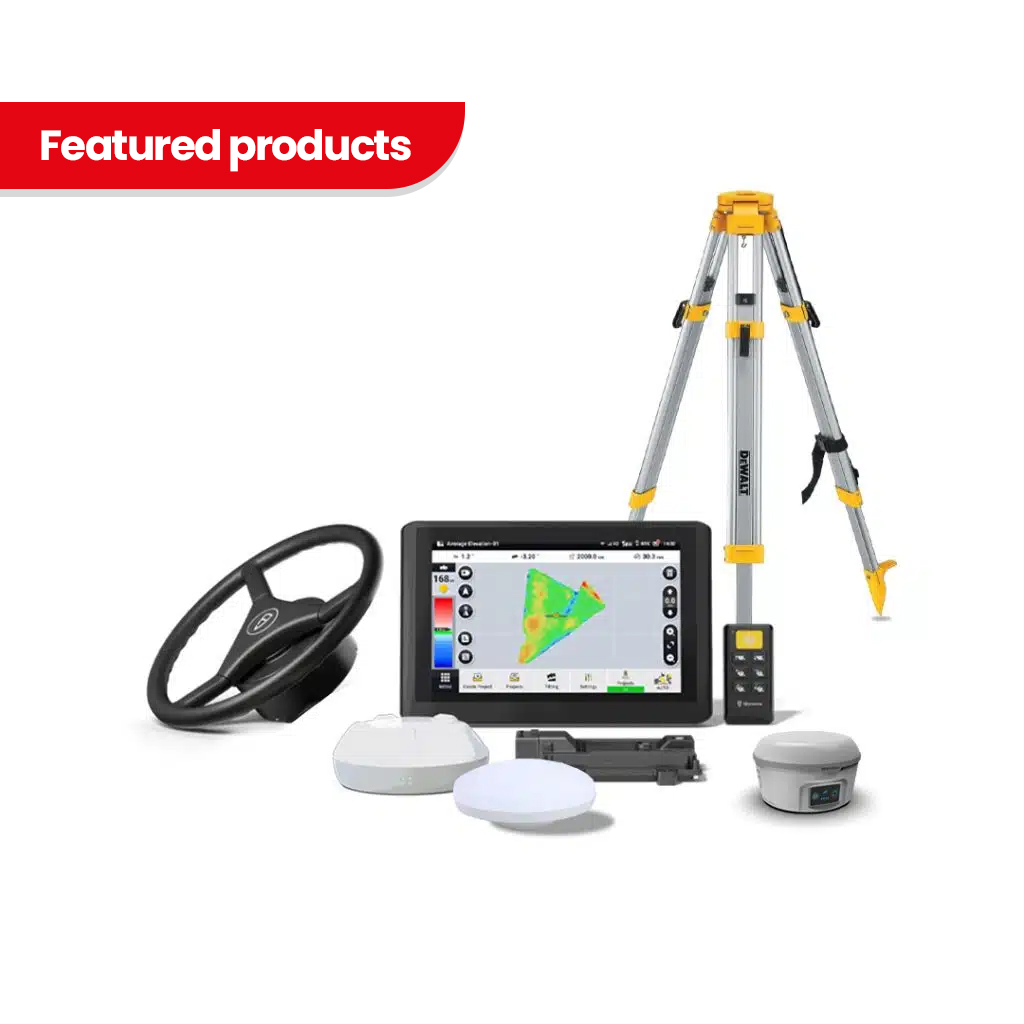
Land leveling is the process of reshaping the surface of land to achieve a desired slope or flatness, ensuring uniformity in elevation across a given area. This is typically done to improve water drainage, enhance irrigation efficiency, and optimize land use for agricultural purposes or construction projects. It involves cutting or filling soil, removing obstacles, and smoothing the terrain to create a level or gently sloped surface. Land leveling helps prevent waterlogging, reduces soil erosion, and can increase crop yield by ensuring more even water distribution.
Laser Systems
GPS Systems
GPS Land Levelling
Laser Land Levelling
For the 1000 acres farms or bigger
For the 1000 acres farms or bigger
Not limited to operating distance to the base station
Lower costs
Gets you the Land SURVEY & TOPOGRAPHY automatically
Only one Base Station Unit at the same time by a few Rover Units
Only one Base Station Unit at the same time by a few Rover Units
Easy to use and without training
Work at Rainy, Foggy, Windy, dusty and high temperature Climate
Immediate online after-sale services
Immediate online after-sale services
Power Mast, Manual Mast, Stand Alone Laser Receiver, Dual Laser Control System
Land leveling is the process of reshaping the surface of the land to achieve a desired slope or level. It is an important practice in various industries, including agriculture, construction, and civil engineering. Land leveling improves irrigation efficiency, promotes uniform crop growth, and enhances the safety and usability of land for construction purposes. This article will explore the benefits, techniques, applications, and equipment used in land leveling, as well as factors affecting its cost and safety considerations.
Land leveling is an important process that plays a vital role in various industries, including agriculture, construction, and civil engineering. The process involves reshaping the surface of the land to achieve a desired slope or level, which has several benefits that make it an essential practice. In this article, we will explore the importance of land leveling and its impact on different industries.
One of the primary benefits of land leveling is improved irrigation efficiency. A level or sloped land surface allows for the even distribution of water, reducing the risk of overwatering or underwatering. This is particularly important in agriculture, where water is a precious resource and efficient water management is essential for crop growth. By leveling the land, irrigation systems can be more effectively designed and implemented, leading to more consistent and successful crop yields.
Another benefit of land leveling is that it promotes uniform crop growth. Uneven terrain can lead to areas where water pools or drains too quickly, resulting in uneven crop growth and reduced yields. By leveling the land, the surface is made more uniform, allowing for more consistent crop growth and yield. This is especially important in large-scale agriculture, where uniform crop growth is necessary for efficient and profitable farming.
Land leveling is also important in the construction industry. A level or sloped land surface is necessary for the safe and effective construction of buildings, roads, and other infrastructure. A flat surface is required for the construction of foundations, and proper grading is necessary to ensure proper drainage and prevent erosion. Land leveling can also help reduce the risk of landslides and other natural disasters, making the land safer and more usable for construction purposes.
In addition to these benefits, land leveling can also help improve the overall appearance of the land. Uneven terrain can be unsightly and make it difficult to use the land for recreational purposes. By leveling the land, it can be made more aesthetically pleasing and easier to use for a variety of purposes.
Finally, land leveling can also have environmental benefits. By improving water distribution and reducing erosion, land leveling can help preserve soil quality and prevent soil degradation. This can have a positive impact on the ecosystem and help ensure that the land remains healthy and productive for years to come.
In conclusion, land leveling is an important process that has many benefits in various industries. From improving irrigation efficiency and promoting uniform crop growth in agriculture to enhancing the safety and usability of land for construction purposes, land leveling plays a critical role in modern society. By using the right techniques and equipment, land leveling can be done efficiently and effectively, leading to better outcomes for all involved.
Cut and Fill Method: This is one of the most common techniques used for land leveling. It involves cutting soil from high areas and filling in low areas to create a level surface. This method is effective for large areas and is often used in road construction and large-scale land development projects.
Grading: Grading involves using a grader to scrape soil from high areas and deposit it in low areas to create a level surface. This technique is commonly used in smaller projects and can be done quickly and efficiently.
Laser Grading: Laser grading is a precise and accurate technique for land leveling. It involves using laser-guided equipment to level the surface of the land to a specific grade. This method is often used in agriculture to create uniform surfaces for irrigation and crop growth.
Drainage: Drainage is an important aspect of land leveling, particularly in areas with high levels of rainfall or water runoff. Drainage techniques involve creating channels and grading the land to redirect water away from buildings and other structures.
Terracing: Terracing is a technique used on steep slopes to create a series of level surfaces. This technique involves cutting steps into the slope and building retaining walls to prevent erosion and create flat surfaces. Terracing is commonly used in agriculture to create more usable land on steep slopes.
Contouring: Contouring is another technique used on sloped terrain to create a level surface. This method involves following the natural contours of the land and cutting into the slope to create a series of level surfaces. Contouring is often used in residential landscaping to create more usable outdoor spaces.
Land leveling is an important process that involves reshaping the surface of the land to achieve a desired slope or level. This practice has several benefits that make it an essential process in various industries, including agriculture, construction, and civil engineering. In this article, we will explore the benefits of land leveling.
Land leveling is a process that involves reshaping the surface of the land to achieve a desired slope or level. The cost of land leveling can vary depending on several factors. In this article, we will explore some of the factors that affect the cost of land leveling.
In conclusion, the cost of land leveling can vary depending on several factors, including the size of the land, terrain, soil conditions, access, equipment, labor, and permits and regulations. By considering these factors, landowners and contractors can better estimate the cost of a land leveling project and develop a budget that meets their needs.
The equipment used for land leveling varies depending on the specific needs of the project, the size of the area, and the terrain. In this article, we will explore some of the most common equipment used for land leveling.