
Corn Silage Fermentation: Why the First 180 Days Are Crucial

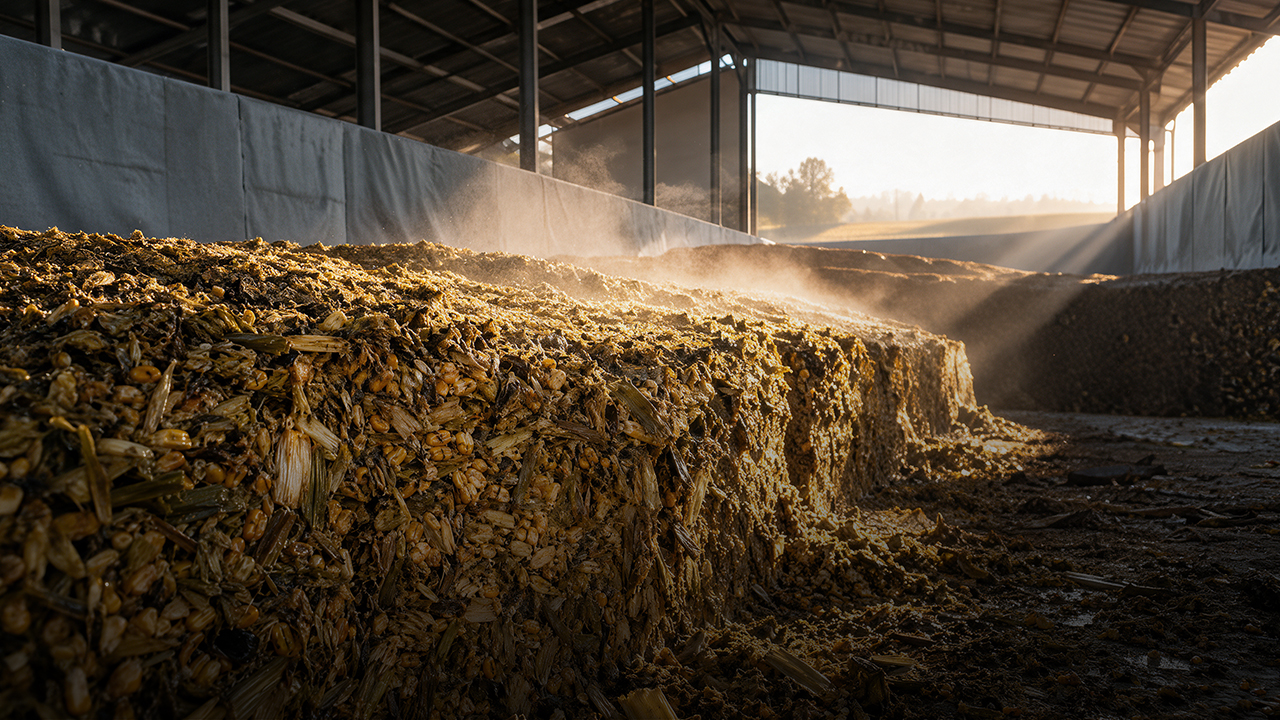
Corn silage fermentation begins after chopped corn is packed and sealed, triggering biological changes that preserve the crop and influence its nutritional value over the first 180 days. However, the crop continues to change after it has been sealed. During the first few weeks fermentation creates the conditions needed to preserve the stored crop while over the following months slower changes within the kernels can cause some of the starch to become easier for the cattle to digest. The changes matter when farmers decide on when to open a silo and how to use the stored feed, because silage with the same age may still differ in nutritional value.
Days 0 to 3: A Race to Remove Air
Even after the corn is chopped, its living plant cells continue to breathe. The oxygen that remains trapped between the chopped pieces allows both these cells and any bacteria that require air to continue burning the plant’s sugars. This process creates heat and consumes the nutrients which you wanted to preserve. The respiration phase only lasts a few hours when oxygen is quickly used up, but continues for a longer time if the pieces are packed poorly. Under normal fermentation conditions, silage temperature rises by no more than approximately 20°F (-6.6°C) relative to its temperature at ensiling.
When the remaining oxygen is used, bacteria that do not require air take over and start converting sugars into acids, the first of these is acetic acid, which causes the pH to fall from around 6 down to about 5 within 1-2 days. The speed of this process is affected by the moisture content, the length of the chop, how closely the forage is packed, the amount of sugar available and the type of bacteria present. The aim is not to keep the fermentation going on indefinitely, but rather to produce conditions that will preserve the crop, which is why it is so important to pack the forage tightly and to seal it tightly and quickly.
Days 3 to 21: Corn Silage Fermentation Locks In Preservation
As lactic acid bacteria take over, the acid they produce becomes central to the preservation process. Lactic acid production remains especially active for approximately two weeks. During the process, acidity increases until the silage reaches a pH low enough to stop bacterial growth. Well made silage is usually stable after about 21 days as long as there is no air, with a final pH of about 3.5 to 4.5 for corn silage.
This doesn’t mean that all silos are ready on the same day. The amount of dry matter is also important. The optimal harvesting period for corn silage is when the dry matter content is about 32% to 38%. Wet corn may ferment badly and cause a nutrient-rich liquid to leak out while on the other hand, corn that is too dry is difficult to pack, increasing the risk of spoilage and losses during fermentation.
Some warning signs that can indicate the fermentation has failed are: a pH level above 5, a high concentration of ammonia, more butyric acid than lactic acid and a strong and unpleasant smell. If there are visible mold, unusual odors, or excessive heating after air exposure, it should be checked more carefully. How long silage has been stored does not necessarily show whether it has been preserved properly.
Days 21 to 60: Ready to Feed Doesn’t Mean Finished Changing
After the fermentation process has been stabilized, properly preserved silage can be used for feeding if forage supplies are running low. However, silage that has been safely preserved may still undergo changes in its nutritional content.
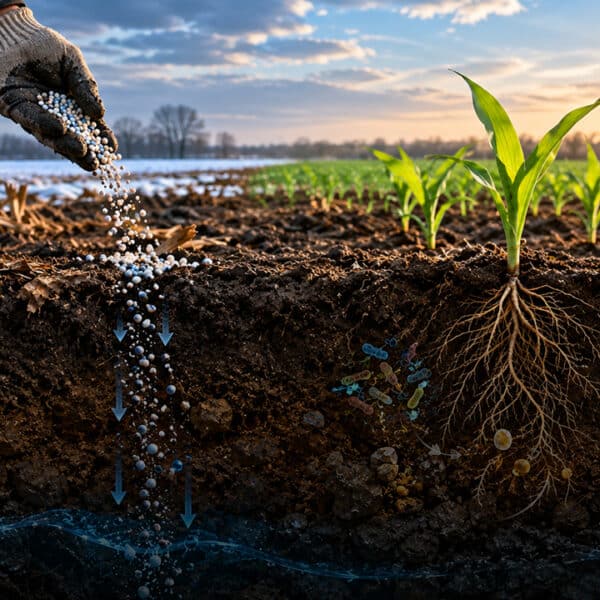
Starch is one of primary energy sources in corn kernels and a portion of it is contained within a network of proteins which restricts the ability of digestive microbes to access it. This protein network often breaks down gradually during storage. Protein breakdown during ensiling is believed to be the main reason starch becomes easier to digest. In a 2012 paper published in the Journal of Dairy Science, Der Bedrosian and coauthors reported that soluble nitrogen and ammonia continued to rise as storage time increased, indicating that the protein breakdown remains active after two or three months.
Laboratory measurements of starch digestibility generally increase most rapidly during the first one or two months and a 2023 study involving five hybrids found that the differences among the hybrids became evident during the first two months but gradually became less pronounced as storage continued. Where forage reserves are limited, using younger silage may still be a workable option despite its potentially lower starch availability. Farmers should not assume that recently ensiled corn provides the same amount of digestible starch as silage that has been stored for several months.
Days 60 to 180: Starch Availability Can Keep Improving
Starch digestibility can still improve after the second month since protein breakdown goes on. Although several studies have reported improvements beyond 120 days, the largest gains generally occur during the earlier stages of storage. University of Wisconsin Extension summarized four trials showing that storing corn silage for up to six months increased laboratory measured starch digestibility by an average of approximately 15 percentage points.
The degree of change in starch availability depends on the corn hybrid, kernel maturity, dry matter content at harvest and the effectiveness of kernel processing. Wisconsin states that processing has the greatest effect on starch digestibility, while Penn State says that processing is most effective with drier silage and should not be expected to improve crops that are of average maturity or less.
Fiber shows different behavior. Wisconsin Extension reports that ensiling has little effect on fiber digestibility. Most trials showed a small decline of 1 to 2 percentage points at 30 to 60 days, followed by minimal additional change during storage. Similarly, Der Bedrosian’s group found no change in fiber digestibility on average between 45 and 270 days. Waiting a longer time does not ensure that all aspects of feed quality improve.
Monitoring silage over the first 180 days can provide useful information about its development, but farms can begin feeding earlier when the silage is properly preserved and feed supplies require it. The advantage of having extra storage time must be balanced against the feed inventory and the condition of the silage.
Using the Timeline to Make Feeding Decisions
A farm opening its newly filled silage pile after one month faces different feeding decisions from a farm relying on the previous year’s silage while its new crop remains in storage until the fourth month. Although both situations might have feed that is usable, the amount of starch available for digestion can be different. Wisconsin Extension considers it a valid practice for farms to plan their feed inventories so that newly harvested silage can remain in storage for at least four months before feeding. It also emphasizes measuring starch digestibility throughout feed-out because this characteristic changes during storage. Feed testing is better at showing this difference than the calendar is.
Begin by using representative samples and having a laboratory analysis carried out on the dry matter, starch, starch digestibility, and fiber. If there is any doubt about the preservation, a fermentation profile can be of help. When comparing the results, it is important to use the same laboratory and the same method.
Laboratories usually carry out either a 4-hour test on samples that have been finely ground or a 7-hour test on coarser samples and a study from 2023 found that finer grinding increased the 7-hour results regardless of how long the silage had been stored. Changes in dry matter content affect the quantity of silage needed, while changes in digestibility may justify reviewing the ration with a livestock nutritionist. Der Bedrosian and colleagues also recommend accounting for changes in nutritive value during storage when formulating rations.
When inspecting the silo, check for excessive heating, visible mold, and unusual odors. Remove and discard any silage that shows signs of spoilage. The silage should be fed as soon as possible after it has been taken from the silo since exposure to oxygen allows yeasts and molds to grow, and the size of the exposed surface should correspond to the feeding rate. This is important regardless of whether the silage has been stored for 30 days or 180.
Poor storage cannot be compensated for by the passage of time. Kansas research summarized by Penn State found that small bunker silos covered during 180 days of storage recovered nearly 90% of their dry matter at every depth. In uncovered silos, however, recovery in the top 10 inches was only about 25%.
When Time Makes a Difference
During the first 180 days of storage, corn silage undergoes two important processes: rapid fermentation that preserves the crop and slower changes that may increase starch availability for digestion. Although waiting a longer time might increase the availability of starch, it cannot fix poor packing or sealing and does not take the place of feed testing. Good feeding decisions should account for how long the silage has been stored, its current condition, and the nutritional needs of the cattle.