

Why Condensation Forms in High Tunnels During Cool Fall Nights

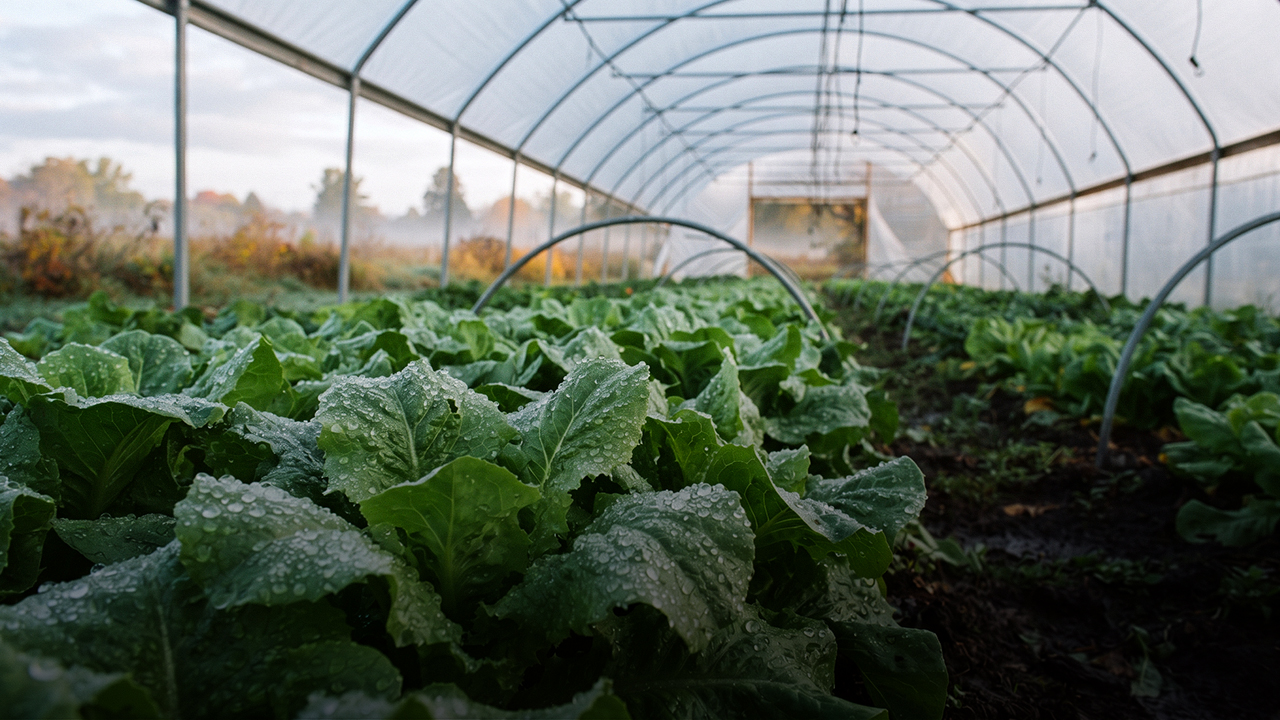
High tunnels may seem simple in design, but the conditions inside them can change rapidly. After a sunny fall afternoon the tunnel may be warm and dry, but by early morning the same space can feel damp. Water builds up on the plastic, leaves remain wet, and droplets may fall onto the crops even if it has not rained.
This process is called condensation, and it becomes very noticeable in fall when there are warm days followed by cool nights while the farmers are attempting to retain the heat without trapping excessive moisture.
Why Fall Brings More Condensation
During the day, the sunlight warms the soil, the plants and the air within the high tunnel; causing the plants to give off water by transpiration and the soil releasing its moisture into the air. Since, the wet soil releases moisture and irrigation contributes to that as well.
As soon as the sun sets the tunnel begins to cool. The plastic covering usually cools more quickly than the air within it, particularly when the outside temperature drops rapidly. Colder air is unable to hold as much water vapor as warmer air. As the tunnel cools down, the relative humidity increases. When the air or a surface reaches the dew point, that is the temperature at which water vapor begins to turn into liquid, condensation forms. This is why droplets may appear on the inside of the plastic in the morning even after a dry night.
The Roof Is Only Part of the Problem
Water on the plastic is easy to notice, but what happens to the crop below is more important.
Condensation may form directly on the leaves and stems, but also the condensation on the roof can flow along the plastic or drip onto the crop. Either way, the leaves can remain wet for hours.
It isn’t automatically a problem if a few droplets are present. The real issue is how long the moisture stays there. If humidity remains high and the leaves stay wet for a long time, this can provide favorable conditions for a number of crop diseases.
Tomatoes serve as a good example of this. Gray mold, which is caused by Botrytis cinerea, becomes more likely in cool and humid conditions. Research shows spores are most likely to germinate when tomato leaves stay wet for 5 to 8 hours. A tunnel that appears fine in the afternoon can therefore provide much better disease conditions by morning.
Ventilation Gets Harder in Fall
The obvious response to high humidity is ventilation, but in the fall this becomes a more complicated decision. By opening the tunnel, the humid air can escape and outside air comes to fill its place, which helps speed up the drying process. The issue is that it also causes heat to escape.
Let’s say, on a cold evening a farmer might want to keep the crop warm while at the same time preventing humidity from building up. That makes timing important; if the tunnel is vented during the warmer part of the day it will help to get the moisture out before the tunnel is closed for the night, and it is possible to reopen the tunnel in the morning if the conditions permit in order to remove the humid air and dry the condensation that formed during the night.
There are no single ventilation schedule works for every tunnel since the type of crop, the outdoor temperature, the wind, the design of the tunnel, and the anticipated overnight low all influence the choice.
Irrigation and Airflow Matter Too
The moisture problem isn’t entirely due to the weather; irrigation brings more moisture into the tunnel environment and excess irrigation can contribute to higher humidity as conditions cool. By watering early in the day the crop and the soil surface have more time to dry out before the temperatures drop. The aim isn’t to keep the tunnel completely dry, but it is to prevent adding more moisture than the crop requires.
The same logic applies to the airflow around the plants matters for the same reason. Dense foliage can restrict air movement and allow humidity to build within the crop canopy causing the leaves to dry more slowly. It is possible to improve air movement through the crop by ensuring reasonable spacing, pruning where it is needed and by removing any old or dead plant material.
Fans can help improve circulation, but they don’t remove moisture by themselves. Simply moving humid air around the tunnel is not the same as replacing it with drier air.
Finding The Right Balance
Fall condensation is a normal consequence of moisture, cold air, and cold surfaces inside a high tunnel, and it cannot always be avoided, nor is eliminating every trace of it is necessary. What is important is whether the humidity remains high and the leaves stay wet for long periods.
Good ventilation, proper irrigation, and improved airflow around the crops can lessen that risk. Although the balance will vary with the weather, an understanding of why condensation occurs makes it easier to decide when the tunnel requires more air and when it is more important to retain heat.