





Fall Fertilizer Application: What Happens Before Spring

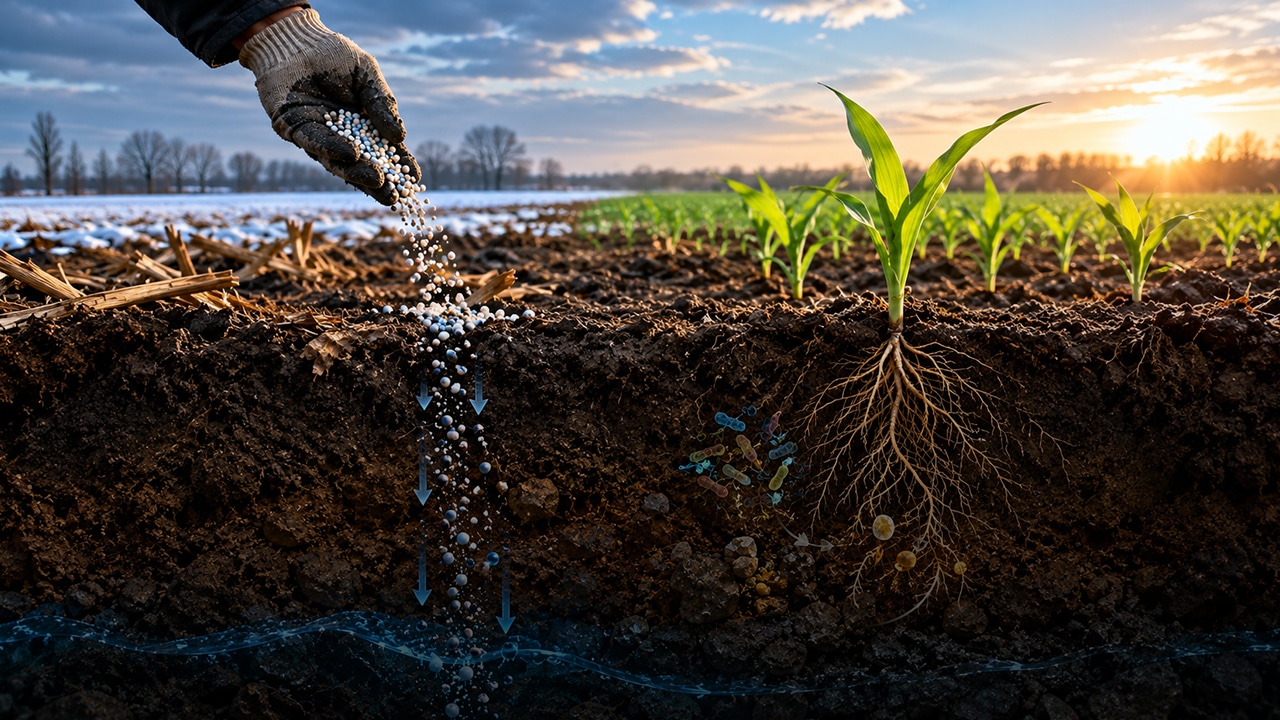
Fall fertilizer application might seem like the end of the job after harvesting. However, applying fertilizer in the fall begins a process that lasts for months in the soil. The three main nutrients for crops (nitrogen, phosphorus, and potassium) do not remain unchanged until spring. As the soil cools, freezes, thaws and gets wet, the nutrients can alter their form, move around, or become more difficult for the roots to access.
These changes determine how much the following crop will take up and how much may end up in adjacent water. By understanding what each nutrient does during the winter period, farmers can decide whether it makes sense to apply the fertilizer in the fall or whether it is better to wait.
Cooler Soil Slows Nitrogen Conversion
Nitrogen is the nutrient most affected by application timing. A great many nitrogen fertilizers supply or produce ammonium, a form of nitrogen that has a positive charge and which is held onto by soil particles. According to Iowa State University Extension (John Sawyer), ammonium is not lost through leaching or denitrification and so remains in the soil even if the conditions are extremely wet.
The problems begin when soil microbes turn ammonium into nitrate; this process is known as nitrification. Although nitrate is a form of nitrogen that crops can easily take up, it carries a negative charge and as a result the soil repels it, which is why this form can be lost to water.
It is the soil temperature that has the greatest influence on this process. According to Iowa State, nitrification proceeds most quickly at around 90°F, slows down quickly when the temperature falls below 50°F, and carries on slowly all the way down to 32°F, although it does not come to a complete halt until the soil freezes. This is why recommendations regarding the application of nitrogen in the fall are based on soil temperature rather than on a calendar date.
- Wait until the soil is cold. Both Iowa State and the Illinois Extension advise delaying the application of anhydrous ammonia, a nitrogen fertilizer that is widely used, until the soil reaches 50°F and continues to cool. The Illinois Extension takes this measurement at a depth of 4 inches.
- Iowa State focuses on a sustained cooling trend below 50°F rather than on the first day the soil reaches that temperature. It is therefore advisable to check the 6- to 10-day forecast since warm weather may cause the soil temperatures to rise again.
- The timing may differ; in Iowa the soils drop below 50°F between late October and late November, and in the northern two-thirds of Illinois it is usually from late October to early November.
Iowa State also states that it recommends only anhydrous ammonia and manure high in ammonium, such as liquid swine manure, as nitrogen sources for fall application to corn; yet even in that case relying on cold soil does not ensure that the nitrogen will remain in place until spring.
Water Is What Turns Nitrate Into a Loss
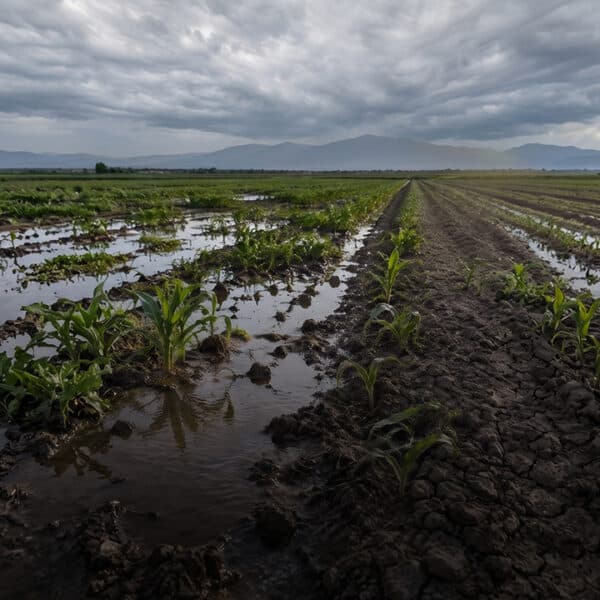
When nitrogen has turned into nitrate, water then becomes the main issue. In wet conditions the nitrate can be washed down below the root zone, a process known as leaching. In waterlogged soil, where there is a lack of oxygen, microorganisms can also turn nitrate into gases which then escape into the air, this being called denitrification. Iowa State regards nitrate as the form that can be lost under wet conditions.
Winter is not the only risky season; according to Iowa State, the period from May to June has historically been the high-risk time for wet soils and nitrate loss, which means that nitrogen applied in the fall may still be at risk of loss the following spring. Since the weather in any particular year cannot be predicted, a wet season does not necessarily show that a certain amount of nitrogen has been lost.
Inhibitors of nitrification (substances which slow down the transformation of ammonium into nitrate) can be of some help, but they do have limitations. According to Iowa State, such inhibitors slow the process without halting it and break down over time, the breakdown being accelerated by warm soil; the value of the inhibitors depends on there being a sufficient amount of ammonium left when wet weather comes, and they make no real difference if the inhibitor has become ineffective by that time. Illinois Extension states that inhibitors should not be used as a substitute for waiting for the soil to reach the proper temperature, and that the two measures work best when used together.
The difference between fall and spring also lies in the rate. According to the Illinois Extension, research has shown that the optimal nitrogen rate is approximately 16 to 20 pounds per acre less when anhydrous ammonia is applied in the spring than when it is applied in the fall, provided that it supplies most of the corn’s nitrogen. The yield difference between the two application times has generally been small. The guidance from Illinois also states that all sources of nitrogen should be taken into account, including any that were applied earlier, when calculating the total rate.
Phosphorus Stays Put, but Availability Changes
Phosphorus behaves quite differently from nitrogen. According to the University of Minnesota Extension (Paulo Pagliari), it is the least mobile of the major nutrients in that it moves only a short distance from the fertilizer granule, approximately a quarter of an inch. It also reacts with the minerals in the soil and these reactions can cause it to become unavailable to the roots. The soil pH is important in this context. The University of Minnesota states that concern about calcium phosphate tie-up arises when the pH is above 7.3, and aluminum phosphate tie-up happens when the pH is between 4.8 and 5.5.
Phosphorus that has been tied up isn’t necessarily lost. Depending on the compound it has formed, some of it may return to forms that plants can use. Minnesota also points out that a standard soil test won’t detect this tied-up phosphorus. Phosphorus applied in the fall can remain in the soil for as long as four to six months before plants take it up. In Minnesota, the cold temperatures of fall and winter slow down these reactions.
Is applying phosphorus in the fall considerably worse? There appears to be little difference, according to Minnesota. Research indicates that there is little difference in phosphorus availability depending on whether fertilizer is applied in the fall or in the spring, and the university suggests that the choice should be based on the prices of fertilizers and the conditions of the fields. The most effective method for dealing with calcium tie-up is banding, which involves placing the fertilizer in a concentrated strip.
The bigger concern is runoff
The loss of phosphorus is mainly a matter of water quality. According to Chelsea Zegler from the University of Wisconsin Extension, dissolved phosphorus can move through water without requiring the presence of soil to carry it. Most of this loss takes place in January, February, and March, since the frozen ground and the melting of snow restrict infiltration.
Dissolved phosphorus may originate from fertilizer applied to the surface in the fall or winter, from manure, from crop residue, from cover crops, or from soil that already contains a lot of phosphorus. Phosphorus that is attached to soil being eroded also escapes, primarily in May and June. In a particular set of farm data from Wisconsin, more than 75 percent of the total phosphorus loss occurred within a six-month period.
Wisconsin also points out that the fact that runoff is clear does not necessarily mean that no phosphorus is escaping. It recommends managing the amount of phosphorus available for runoff by means of erosion control, careful timing and placement, and gradually reducing the soil-test phosphorus levels over time. Reducing tillage and leaving cover crops in the ground over the winter help to decrease erosion.
Potassium Is Held and Released by Clay
Potassium is retained by the clay and organic material in the soil before being released into the soil water, where the plants can take it up. According to the University of Minnesota Extension (Kaiser and Rosen), the potassium that plants can use readily consists of the water-soluble portion together with that which is held loosely by the clay, and standard soil tests measure the amount that is held loosely.
In certain soils potassium becomes trapped between the layers of clay, a phenomenon known as fixation. The amount of moisture present and the type of clay affect what occurs afterwards. Minnesota states that montmorillonite clay fixes potassium when the soil dries out and releases it when the soil becomes wet, whereas illite fixes it when the soil is dry but does not release all of it when the soil is wet.
For most Minnesota soils, potash may be applied in either the fall or the spring, but sandy soils are an exception. Minnesota Extension states that sandy soils which have a low cation exchange capacity are unable to hold much potassium and that potassium should be regarded as “partially mobile” in such soils, which is why it is advised to apply it closer to planting.
Soil testing provides the most reliable indication of fertilizer requirements. In the case of Minnesota’s air-dry test, a value over 160 ppm indicates that no fertilizer should be recommended, whereas applying fertilizer when test values are low or very low is likely to produce a yield response. The Illinois Extension also states that fields which test very high in phosphorus or potassium are probably not going to benefit economically from the addition of fertilizer, and that research has not demonstrated a large difference in yield response when applying these fertilizers before corn rather than before soybeans in a crop rotation.
A Fall Fertilizer Application Example
Imagine a field which has just had its crop harvested and is now to receive a spring crop. The soil tests indicate a requirement for phosphorus but show that there is a sufficient amount of potassium. Furthermore, part of the field has poor drainage, and rain and thaws are common there during the winter months.
One method, though it should not be regarded as a recommendation, is to consider applying phosphorus in the fall if the conditions regarding placement and runoff risk seem acceptable, to omit potassium since the soil tests indicate it is not required, and to delay most of the nitrogen decision until nearer to the time the crop actually needs it. The fact that wet weather is expected does not mean that applying nitrogen in the fall must fail; rather, it provides a reason to consider the timing. In areas where the ground is frozen or on slopes, special care should be taken when placing phosphorus since Wisconsin associates its greatest losses of dissolved phosphorus with frozen soil and snowmelt.
Questions to Ask Before You Apply
- What do locally calibrated soil tests indicate about phosphorus and potassium?
- What form of nitrogen is being used, and is the soil temperature below 50°F and still decreasing?
- How well does the field drain, and where does water gather?
- What is the forecast, and what do typical winters and springs look like?
- How and where is the fertilizer to be placed, and is there ground cover to limit runoff?
- Would an inhibitor help as a supplement to good timing rather than a substitute for it?
What to Consider Before Choosing Fall or Spring Fertilization
Deciding whether to apply fertilizer in the fall is not simply a question of what is put on the field, but also of what happens to the nutrients before the crop needs them. Nitrogen, phosphorus and potassium each behave differently during the winter months and may be lost in different ways. By taking account of the nutrient involved, soil conditions, weather and the needs of the crop, farmers can make a more informed choice between fall and spring application. Local Extension recommendations should also be considered when making the final decision.