

Harvest Ruts and Soil Compaction: What Ruts Reveal Below the Surface

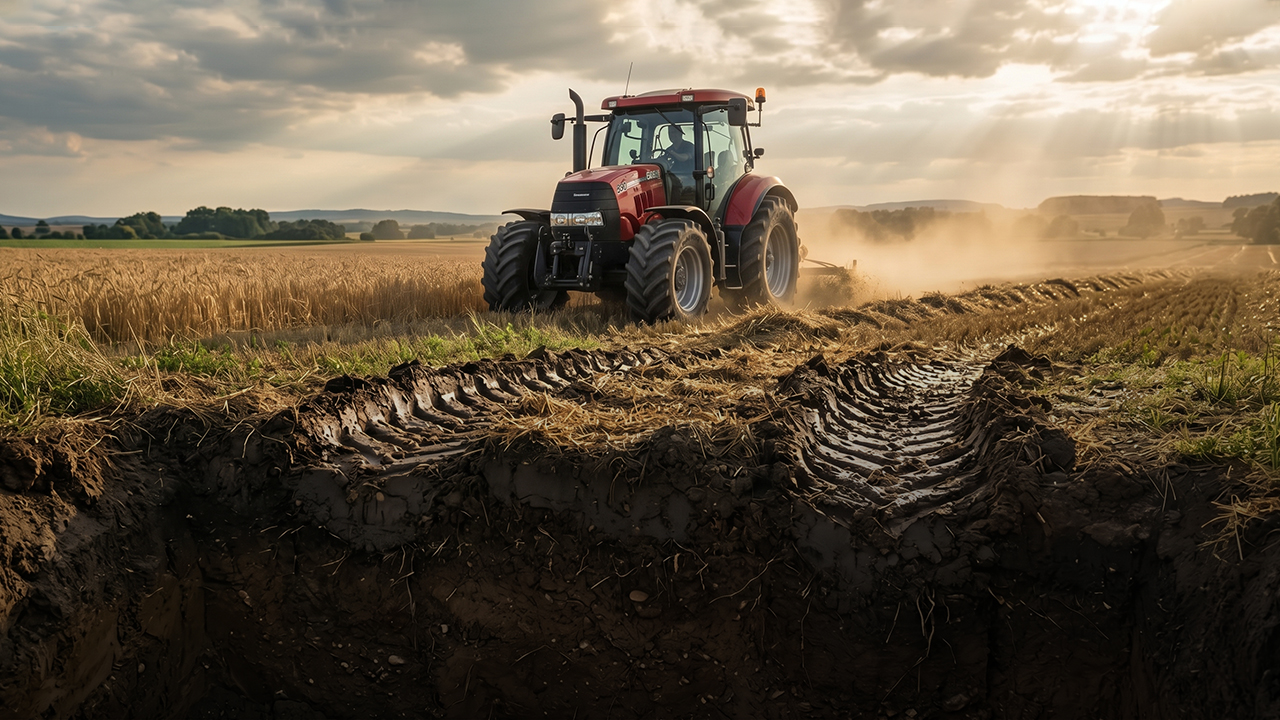
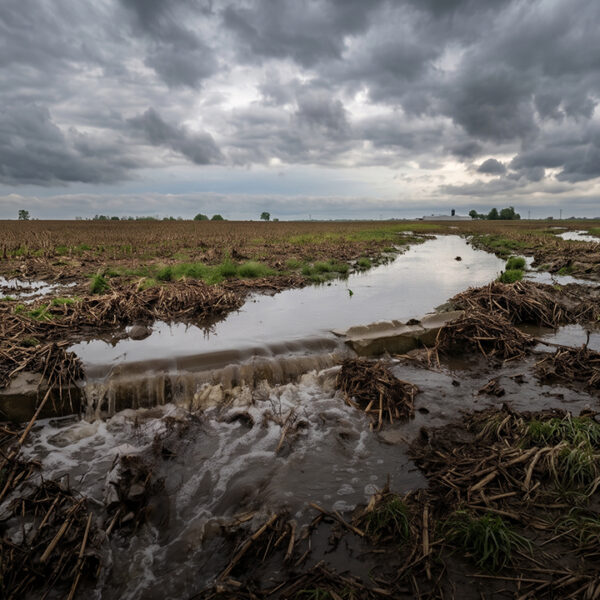
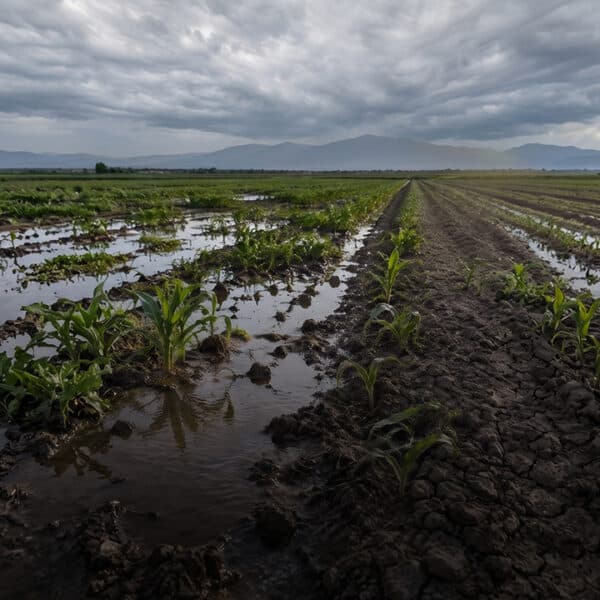
After a wet harvest, the field can appear quite different. Tires that had left marks on the ground before may begin to make deeper tracks as the machinery moves over softer ground. Soil may be pushed outward along the edges, and water can collect in the tracks. These tracks are known as harvest ruts. They are easy to see, but the more important question is what has happened to the soil beneath.
Why Harvest Ruts Form
Ruts develop because the soil is unable to bear the weight moving over it, rather than just gliding over the surface, a tire or track sinks in, pushing the soil downward and sideways.
The amount of water present is the main factor in the degree to which soil is vulnerable. A review published in 2024 in the journal Plant and Soil identifies soil water content as the most important factor in determining how easily the soil compacts, in wet soil it is less capable of supporting a load without becoming more densely squeezed, whereas drier soil resists compaction more effectively. This is the reason why ruts appear after it has rained and in areas of the field with poor drainage, since heavy machinery can sink deeper in there than it would in drier conditions.
Equipment weight is also an important factor because of how concentrated the weight is. Apart from the weight of the machine itself, you have to account for the total weight on the way back as well. For example, three-quarters of a combine’s weight, together with nearly the entire loaded grain tank, is supported by the front axle. If the yield is good, a grain tank extension is used, and a 12-row header is fitted, the front axle can then carry 18 to 20 tons.
The amount of rutting that develops is affected by soil type, moisture, drainage, the field’s history, the equipment used, and the number of passes.
The Rut Is Only the Part You Can See
The obvious damage on the surface, but a rut may also indicate that the soil underneath the track has become compressed, and compacted soil below a rut can interfere with the root growth and development of the next crop.
A soil that is in good condition contains many pore spaces, the larger pores that allow water and air to pass through the soil and provide room for the roots to grow. When the soil is compacted, the larger pores become smaller which results in slower water infiltration and less air movement while also causing the soil to become harder for the roots to push through. A pool of water left in a wheel track is often a clear indication that the water is not soaking in as it should.
That is the reason why only filling in a rut does not always indicate that the field has got back to its previous state. Farmers often use tillage to eliminate ruts, but tillage alone is not always a good fix for ruts. The surface may appear level but a dense layer can still remain beneath.
A rut on the surface also cannot tell you precisely what is happening deeper in the soil. Compaction can also occur when little or no obvious rutting is visible at the surface. Compaction is not uniform since in some places there is only a compacted surface layer whereas in other areas the compaction extends deeper into the subsoil, and therefore management should be based on the specific situation rather than adhering to a single fix.
Not Every Rut Means the Same Thing
It is better to view ruts as something that varies in severity rather than fixed categories. For example, a shallow track may mainly reflect surface disturbance, while a deeper rut, particularly one in which soil has been pushed outward or water is standing in it, shows that the soil was deforming under the equipment.
The main issue is the depth to which compaction extends. Topsoil compaction can generally be reduced by tilling, although the results depend on the type of the soil. Subsoil compaction is below the normal tillage depth, cannot be alleviated by freezing and thawing or by wetting and drying in any kind of soil, and is usually caused by heavy axle loads of 10 tons or more on wet soil.
The effects can vary depending on the conditions. In a series of compaction experiments, average first-year yield losses were about 15%, although results varied among years and locations. About ten years later, when there had been no further compaction, the average loss fell to around 3%. The remaining loss was caused mainly to residual subsoil compaction. After the soil has become compacted, recovery is generally slow and may take years or even decades depending on the type of soil, the amount by which compaction affects a crop depends on the soil, the weather conditions, the type of crop, and how deep the compaction goes.
A Wet Harvest Makes the Difference Easy to See
Picture some equipment traveling over a field a few days following heavy rainfall, the ground at a higher level having dried sufficiently for the tires to leave only faint tracks, while in a lower section of the field the soil is still wet.
The first pass leaves a clearly visible rut in the wet ground. As the grain tank is being filled, the machine, while loaded, takes the same path, making the track become deeper causing the soil to push outwards to the sides. That change is useful information since it shows the soil is no longer managing the load as before.
Choosing when to harvest is not always easy, since factors such as the condition of the crop, weather forecasts, the availability of labor, and the risk of having to delay the harvest all come into play, and therefore the idea is not that work should cease every time a track is seen but rather, it is that worsening ruts serve as a sign that the risk of more serious damage is increasing. A quick way to assess field conditions is to pick up a small amount of soil. If it can easily be formed into a firm ball by hand, conditions may be unfavorable for traffic.
What Ruts Can Mean After Harvest
In the short term, ruts result in an uneven surface, causing water to hold there and make subsequent field work more difficult. Ruts deeper than about two inches can affect planting in the following spring unless they are leveled.
The long-term issues depend on what took place below the surface. Compacted soil can hinder root growth or slow down the movement of water, and this may influence the way a crop performs the next season. A rut on its own does not show that the yield will be reduced.
Repairing Ruts: Check First, Then Decide
Following harvest, the first thing one might want to do is to level the field immediately. However, if the soil is still wet, this could have the opposite effect. Entering a wet field to carry out deep tillage or any other kind of tillage can make conditions worse by causing additional compaction deeper in the soil, since the wet soil does not crumble and break apart as easily as dry soil does. Tilling compacted soil can make it more susceptible to recompaction and heavy dependence on tillage can set off a cycle of increasing compaction and increasing tillage.
A better option is to delay working on the field until the soil has dried enough. A light tillage pass with a field cultivator, light disk, or harrow one or two weeks before planting may be a suitable way to level the ruts and if there’s only one part of the field that has ruts, it’s enough to just till that part of the field. During the winter, the freezing and thawing that occurs in the upper soil layers may help to loosen the soil, depending on winter temperature and the amount of snow cover, this does not fix the compaction below the tillage depth.
Deep tillage should not be carried out automatically. If a compacted layer is confirmed, any corrective tillage should be deep enough to break through that layer. A penetrometer (a device for measuring the difficulty of pushing into the soil) can help to indicate whether a dense layer is present and at what depth it is located. However, if compaction is detected during the growing season and the soil is dry after harvesting, it may be worth carrying out tillage the following fall.
Fewer Deep Ruts Next Season
There are several ways to reduce the risk of soil compaction: avoid traffic on wet soil, keep axle loads below 10 tons and if possible under 6 tons, distribute the load using flotation tires, dual wheels, or tracks, and reduce the area that is driven on. Soils that contain more organic matter and have more soil life are better at resisting compaction and recover more easily from minor damage.
What Harvest Ruts Ultimately Reveal
Harvest ruts are not simply the uneven tracks left by machinery, but also indicate the point at which soil moisture, field conditions, and the weight of the equipment combined in a way that the ground was unable to support.
The visible rut only tells half the story, the next thing to do is determine whether the problem stops at the surface or goes beyond it and then choose the appropriate repair according to what the field really requires.